

 Find a book


Title
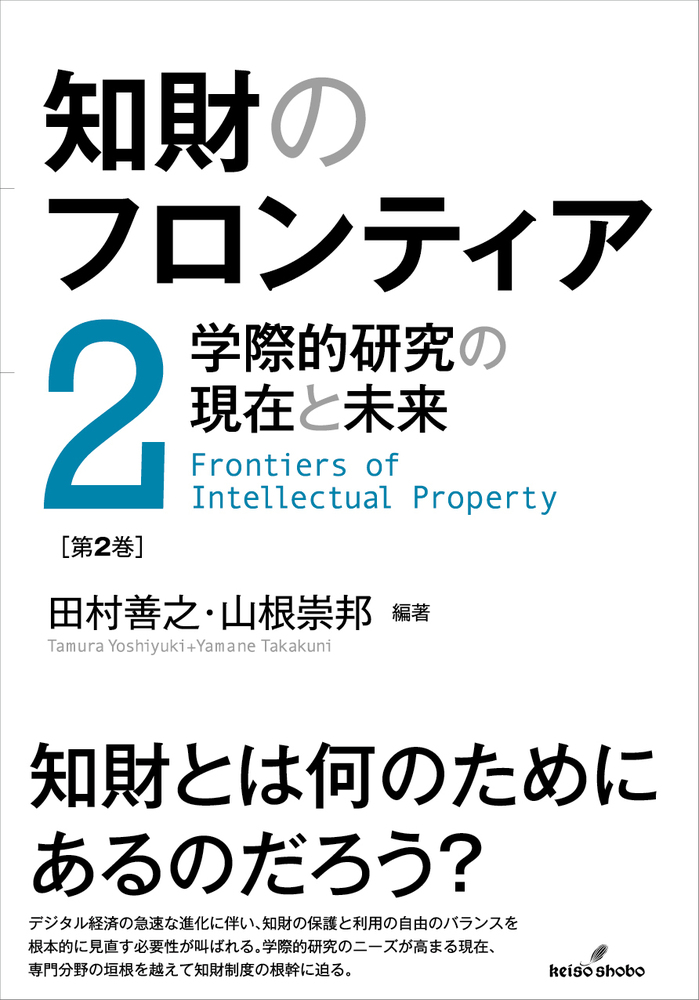
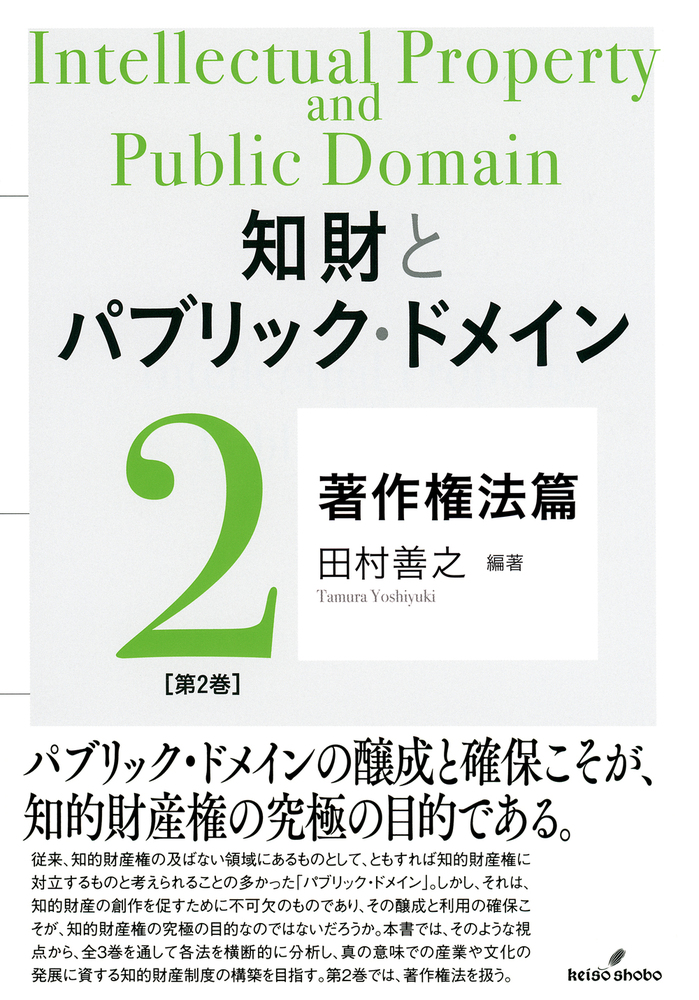
Intellectual Property and Public Domain Chizai To Public Domain 2:Chosakuken Ho Hen (Copyright Law)
Size
420 pages, A5 format
Language
Japanese
Released
February, 2023
ISBN
978-4-326-40415-5
Published by
Keiso Shobo
Book Info
See Book Availability at Library
Japanese Page
 eBook
eBook
This book, the second in a three-volume series titled "Intellectual Property and the Public Domain," deals with copyright law.
It is the result of the Grant-in-Aid for Scientific Research (S) "A Cross-sectional Study of Various Intellectual Property Laws from the Perspective of Cultivating and Securing the Public Domain" (2018-2022).
Conventionally, the "public domain" has often been thought of, consciously or unconsciously, as an area beyond the reach of intellectual property rights, and as being in opposition to intellectual property rights. However, if the purpose of establishing the intellectual property rights system is to promote the development of industry and culture by encouraging the creation of intellectual property, then intellectual property rights ultimately aim to foster a public domain that is accessible to all.
However, the impetus for this research came from a literature review pointing out that while traditional intellectual property law has focused on intellectual creations and the concept of creators, the public domain has only been passively defined as something that is not subject to intellectual property rights, and has rarely received any attention. Indeed, if the purpose of intellectual property law is industrial and cultural development, then encouraging and protecting the creation of intellectual works is a means to achieve this. Industrial and cultural development, in turn, should be achieved by enriching the public domain and ensuring its use. Therefore, fostering a public domain must be understood as the ultimate purpose of intellectual property law.
For example, in the field of copyright law, which this volume deals with, focusing on ex ante choices from the creator's perspective can sometimes result in a conclusion that affirms creativity when a small number of choices are selected from a large number of options. It can also be concluded that industrial designs, once created, should be recognized as copyrightable works. The introduction of fair use, which limits copyright, requires legislative evidence to support it. When the effect of a copyright term extension is unclear, some argue that it should be granted in harmony with the international trend that prioritizes the protection of creators. In contrast, this study focuses on ex ante choices, rather than ex ante choices, in order to preserve a sufficient public domain for future users and creators, and denies copyrightability for such a small number of choices. Furthermore, not all creative works are considered works of authorship, and based on the idea that copyright law limits the creative works that should be protected by cultural scope requirements, the law denies the copyrightability of industrial designs. Furthermore, when it comes to copyright limitations and duration, the law requires those who claim copyright protection to provide legislative evidence.
(Written by TAMURA Yoshiyuki, Professor, Graduate Schools for Law and Politics / 2025)