

 Find a book


Title
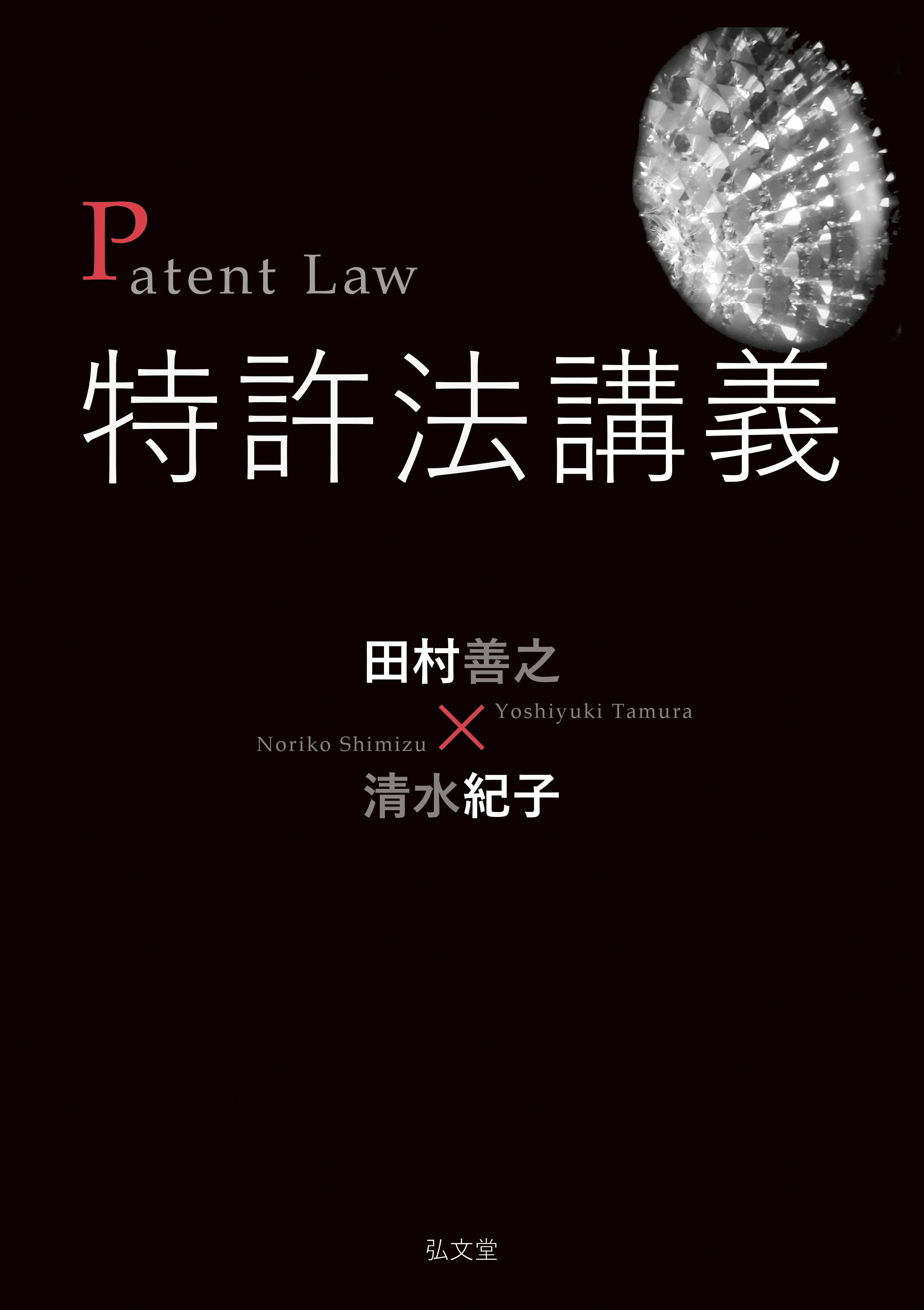
Intellectual Property and Public Domain Chizai To Public Domain 1: Tokkyo Ho Hen (Patent Law)
Size
500 pages, A5 format
Language
Japanese
Released
January, 2023
ISBN
978-4-326-40414-8
Published by
Keiso Shobo
Book Info
See Book Availability at Library
Japanese Page
 eBook
eBook
This book, the first in a three-volume series entitled "Intellectual Property and the Public Domain," deals with patent law.
It is the result of the Grant-in-Aid for Scientific Research (S) "A Cross-sectional Study of Various Intellectual Property Laws from the Perspective of Cultivating and Securing the Public Domain" (2018-2022).
Conventionally, the "public domain" has often been thought of, consciously or unconsciously, as an area beyond the reach of intellectual property rights, and as being in opposition to intellectual property rights. However, if the purpose of establishing the intellectual property rights system is to promote the development of industry and culture by encouraging the creation of intellectual property, then intellectual property rights ultimately aim to foster a public domain that is accessible to all.
However, the impetus for this research came from a literature review pointing out that while traditional intellectual property law has focused on intellectual creations and the concept of creators, the public domain has only been passively defined as something that is not subject to intellectual property rights, and has rarely received any attention. Indeed, if the purpose of intellectual property law is industrial and cultural development, then encouraging and protecting the creation of intellectual works is a means to achieving this. Industrial and cultural development, in turn, should be achieved by enriching the public domain and ensuring its use. Therefore, fostering the public domain must be understood as the ultimate purpose of intellectual property law.
For example, in the world of patents, which this volume deals with, the mindset of protecting intellectual "creations" has been consciously or unconsciously adopted. As a result, even abstract ideas, such as business models and financial products, have been granted patents as long as they involve creative thought. Furthermore, when new uses for food products are discovered, patents are granted. Patents are also granted when significant effects are found, even if the structure is the same as existing publicly known technology. Furthermore, when patents are granted for inventions that border the public domain, such as numerically limited inventions or dosage and administration inventions, the approach has been to prioritize the protection of creators and grant injunctive relief, even if they encroach on the public domain. In contrast, this study argues that once an abstract idea has been determined to belong to the public domain, it should not be patented, no matter how original it may be. Furthermore, in order to protect the public domain that the public has enjoyed up until now, it proposes the conclusion that if an invention cannot be distinguished from publicly known technology, it lacks novelty and should be denied patentability. Even if a new effect is discovered, if the invention has the same structure as publicly known technology, it will be denied inventive step. Furthermore, even if patents are permitted for inventions with numerical limitations or usage/volume limitations, measures are in place to grant protection only if they can be distinguished from the public domain.
(Written by TAMURA Yoshiyuki, Professor, Graduate Schools for Law and Politics / 2025)