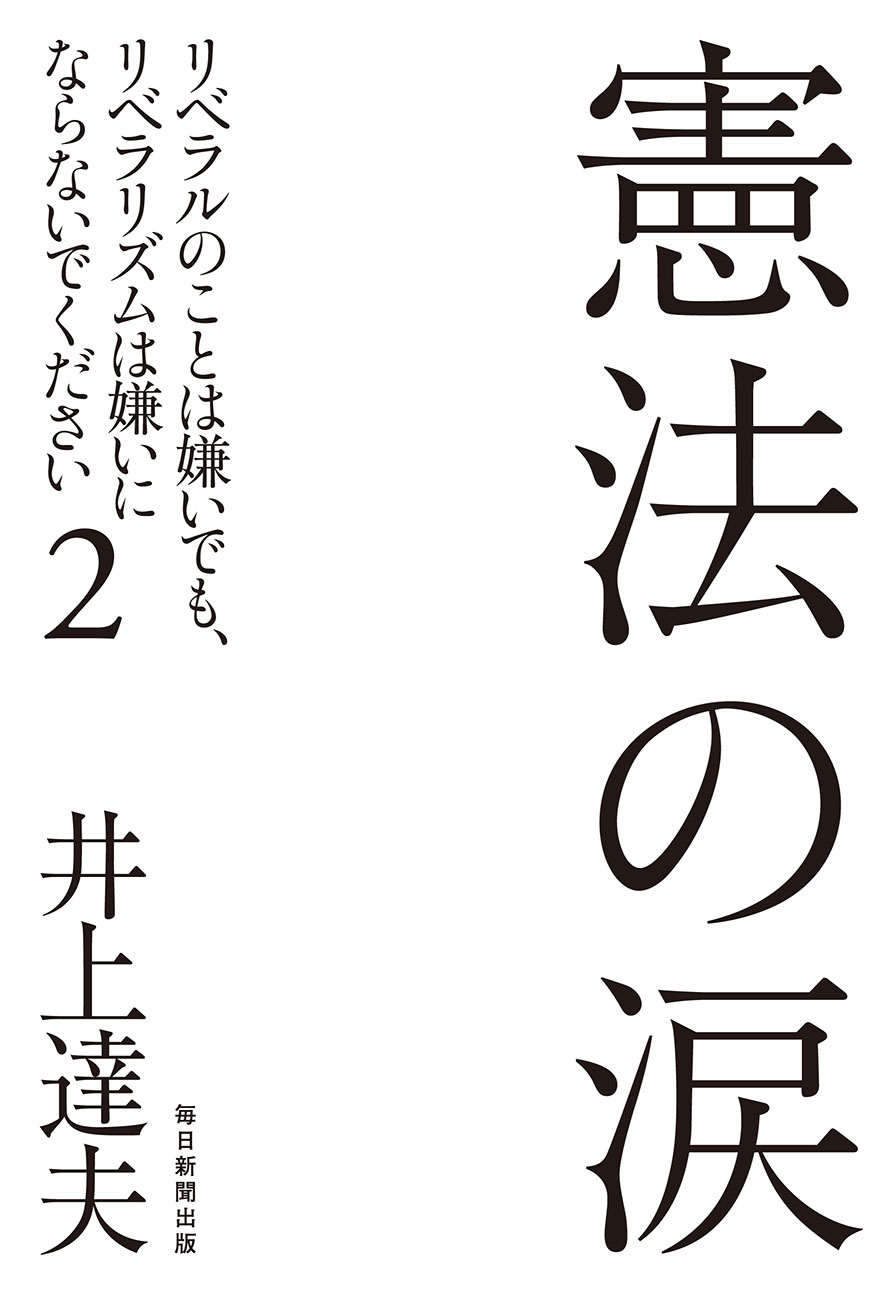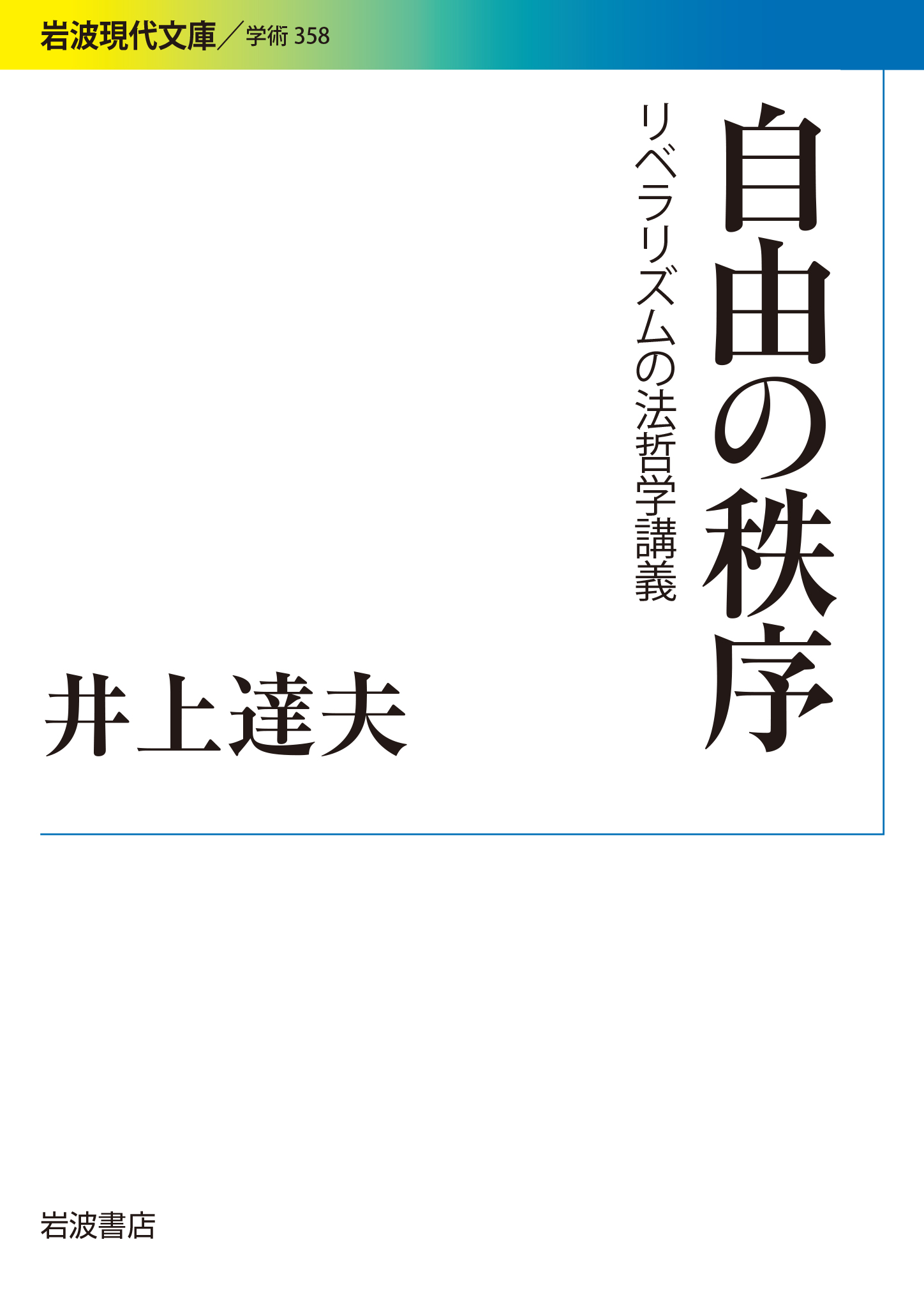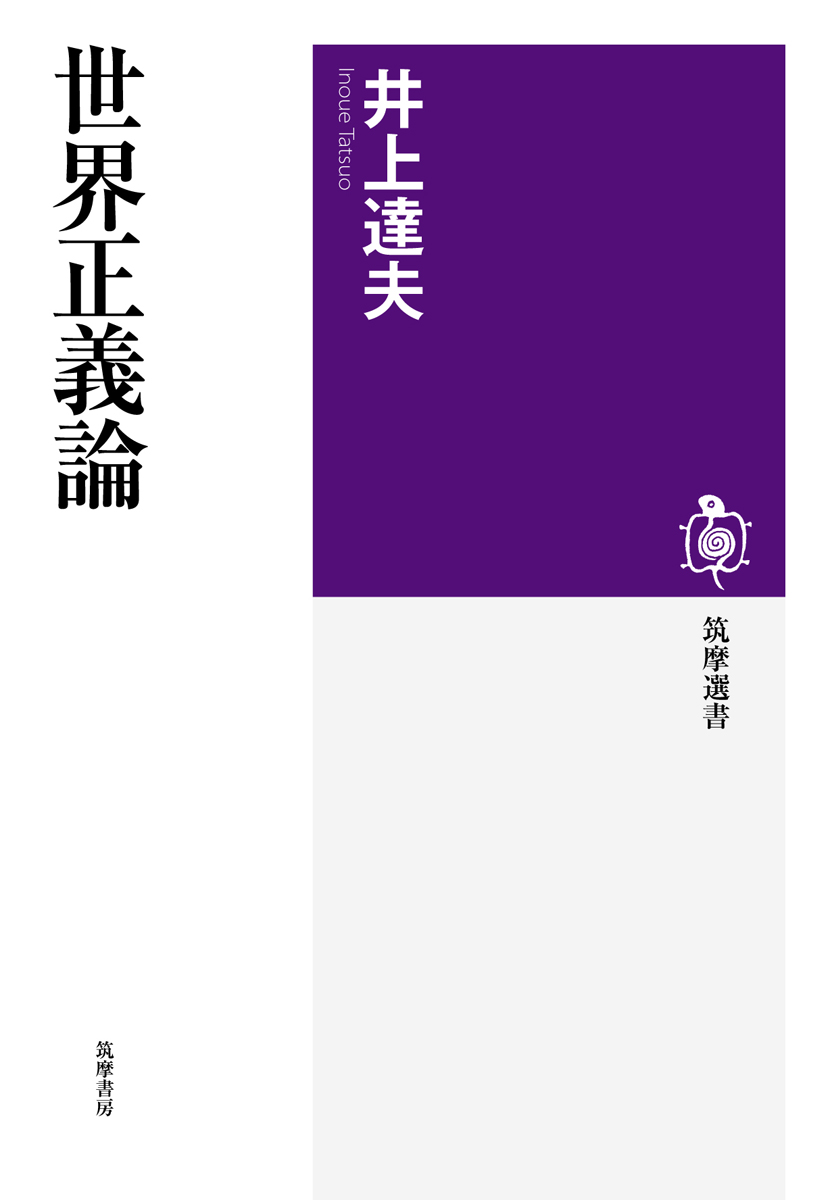


 Find a book


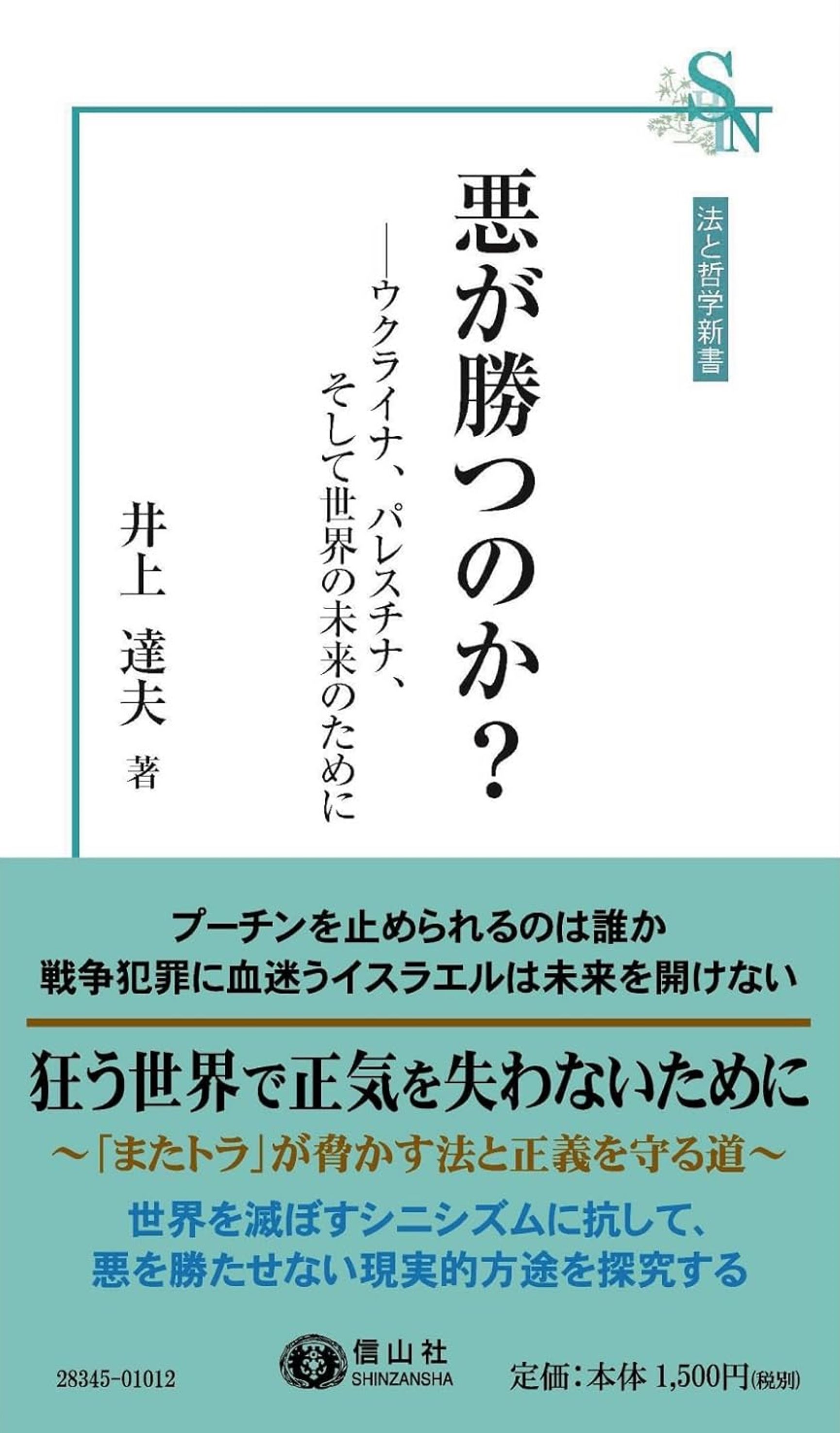
Title
Pocket Books on Law and Philosophy Aku ga Katsu noka? (Will the Evil Win? - How to Save the Future of Ukraine, Palestine and the World)
Size
320 pages, paperback pocket edition
Language
Japanese
Released
February 28, 2025
ISBN
9784797283457
Published by
Shinzansha Publisher Co., Ltd.
Book Info
See Book Availability at Library
Japanese Page
1. My Research Steps Leading to the Present Book
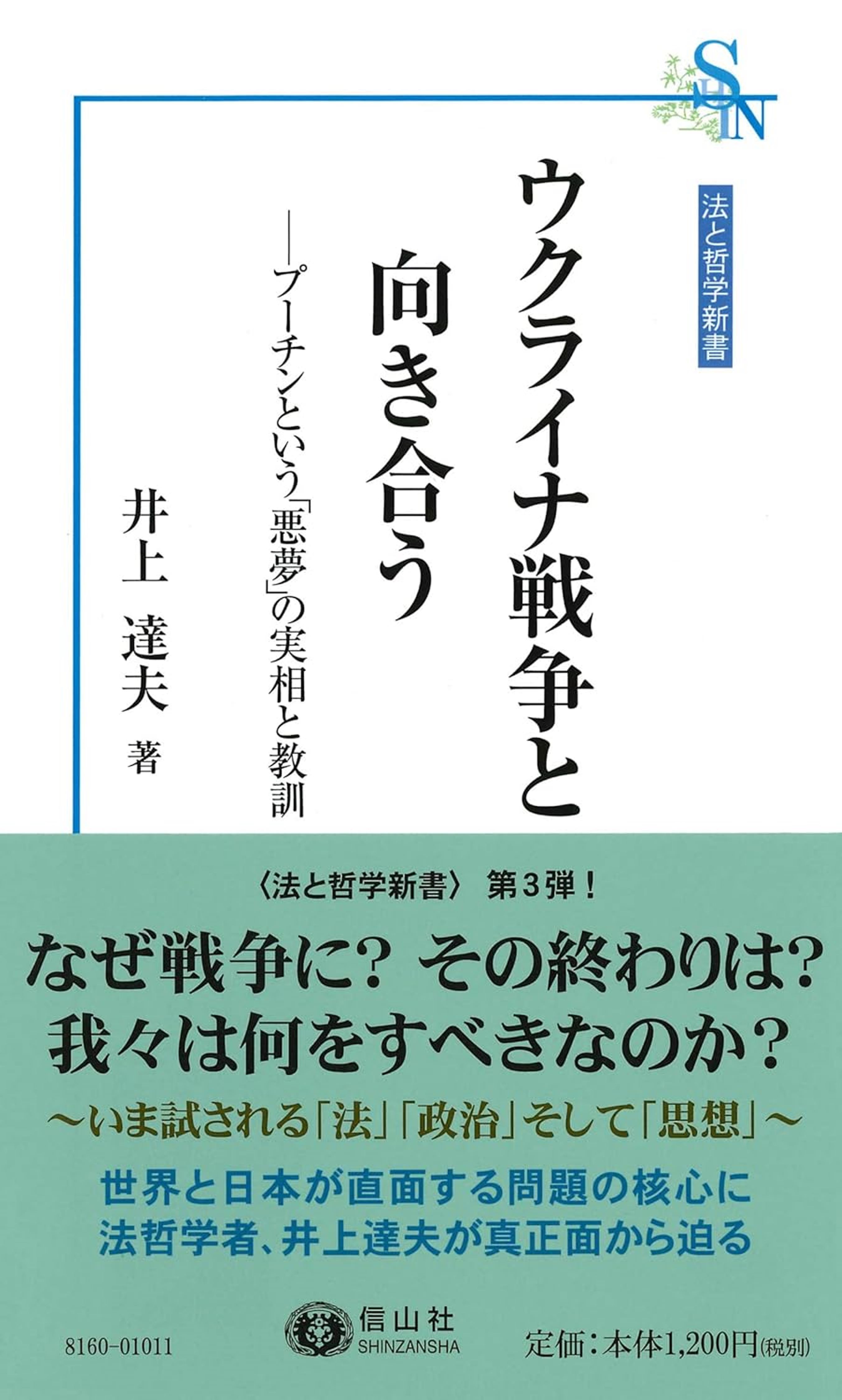
The present book is a sequel of my previously published book Facing the Ukrainian War: The Reality and Lessons of the “Nightmare” Named Putin, Shinzansha, 2022. It is necessary to sketch the basic points of my previous book as it constitutes the background of the present book.
In my previous book I rejected as historically false “the NATO threat theory” which claims that NATO’s eastward expansion intimidated Putin into the invasion of Ukraine as a preemptive defense. I also examined the alternative dominant view, “the new Russian imperialism theory,” which claims that Neo-Eurasianism drove Putin to the invasion. I hold it as partly correct in indicating that Russia’s miliary goal is not defensive (making Ukraine a neutralized buffer state against NATO) but aggressive in an expansionist way (absorbing Ukraine as part of Russian territory or as a Russian puppet state). But I added a critical reservation that Putin uses the Neo-Eurasian imperialist language only as a propagandist tool for aggrandizing the invasion without seriously believing in it.
As a more accurate explanation of Putin’s real motivation for the invasion I advocated “Putin’s self-protection theory” according to which Putin launched the invasion to protect and to reinforce his own domestic political power basis. He had to do that because it is necessary for him to divert mounting domestic popular discontents about the autocratic oppression and kleptocratic corruption swelling under his more than twenty-year long regime before the 2024 presidential election that he expects to enable him to eternalize his power. Launching “a war with anti-Russian enemies” is a best way to achieve this aim because it enhances nationalistic passions and fidelity to the government among Russian people while enabling the government to oppress dissidents and opposing groups as “foreign agents” and traitors.
With this view as a background, I argued that Putin will never stop invasion unless the economic and military exhaustion for Russia aggravates to the point where Putin comes to be afraid that the further continuation of the invasive war will arouse popular discontents and endanger his own power basis. The political conclusion to be drawn is that the Western world (including Japan) should reinforce sanctions against Russia and economic and military assistance for Ukraine. I also discussed the important lessons that Japan should learn from the Ukraine war in terms of its constitutional reforms and energy policy shift.
As I predicted in my previous book, the Ukraine war has been protracted. I have been continuing to observe the military/economic/political developments of the war and published the following two papers (in Japanese) after my previous book and before the present one: (1) “The Ukrainian War Reinvestigated: You Can’t Realize a Sustainable Peace by Rewarding the Invader,” in Law and Philosophy, Vol. 9 (2023), pp. 1-36; (2) “How to Sail on the Wild Sea of Our World: Beyond the Revanchism Mad on War Crimes and the Appeasement Policy Supporting Invaders,” in Law and Philosophy, Vol. 10 (2024), pp. 1-45. The paper (1) is focused on the Ukraine war. The paper (2), while renewing my discussion of the Ukraine war, goes on to consider the Gaza war that broke out because of the invasion of Israel by Hamas on October 7, 2023 (hereafter referred to as 10. 7 invasion). It analyzes the cause and background of the Gaza war, shows the legal and normative assessments of military actions both on the sides of Hamas and Israel, and investigates into the way to end the war in a fair and sustainable way.
Donald Trump won the U. S. presidential election in November, 2024. He clearly took a pro-Russian stance about the Ukraine war and showed his will to pressurize Ukraine to meet the Russian demands, while he supported Israel more strongly than the Biden administration about the Gaza war. Accordingly, there arose deep apprehension in the world that the second Trump administration (hereafter referred to as Trump II) would undermine the endeavor of the international society to stop Russian invasion of Ukraine and Israel’s war crimes against civilian residents in Gaza. The present book is an attempt to respond to this international apprehension and to show the way to prevent the apprehended danger from being realized. The above-mentioned papers (1) and (2) are, together with some supplementary notes and postscripts, reprinted as Chapters 1 and 2 respectively. Chapter 3 is newly written to consider the changing situations from June, 2024 to the emergence of Trump II and to discuss how to cope with its turbulent influences. The book was published in the end of February, 2025, and its prologue, written to complete my manuscript, was dated January 20, 2025 (Japan time), the day before the Inauguration of 47th U. S. President Donald Trump.
2. The Synopsis of Chapter 1
In Chapter 1, I thoroughgoingly criticize what I call “Appeasement-of-Russia Discourse” (hereafter referred to as ARD). ARD, which has been spreading as the Ukraine war has been protracted, makes the following claims: (1) The war is prolonged because Ukraine is continuing to resist the Russian invasion; (2) As the war is prolonged, it will increase the danger of being escalated into the third world war that may involve nuclear warfare; (3) Ukraine is continuing to resist Russia because the Western countries are continuing to give military and economic support to Ukraine; Therefore, (4) the Western countries should cut off their support to Ukraine and pressurize it to yield to Russian demands in order to stop the war. I made the following points to show the inversive, deceptive and self-defeating nature of ARD.
First, the ARD-claim (1) that Russia is continuing to invade Ukraine because Ukraine is continuing to resist Russia is a topsy-turvy assertion. The truth is that Ukraine is continuing to resist Russia because Russia is continuing to invade Ukraine. If Russia stops invading Ukraine, Ukraine will surely stop its resistance because it would have no invasion to resist. But if Ukraine stops its resistance, Russia will take advantage of that opportunity to push forward its invasion to occupy the four provinces in the eastern and southern regions of Ukraine that Russia claims to have annexed without having full military control over them and eventually to dominate over the whole Ukraine.
Second, the ARD-claim (2) assumes that Ukraine is responsible for the danger of the escalation of the war into the third world war, but it is an unjust shift of responsibility. The Western countries have been, and are still clearly committed to, limiting their military assistance for Ukraine to the supply of weapons, information and instruction under the precondition that they will not join Ukraine in its combat with Russia. It is entirely up to the Western countries, not to Ukraine, to decide whether they will revoke the self-imposed limitation and join Ukraine in fighting with Russia. They will be involved in direct combat with Russia only when it attacks a member country of NATO, such as Poland, that is strongly assisting Ukraine. Although Russia is running military bluffs on the Western countries, it is unlikely for Putin to go to the length of making such attacks that will cause a full-scale war with NATO because it would be self-destructive for Russia. But if it should happen, it would be Russia, not Ukraine, that is to be blamed for making such a silly decision. In short, the Western countries and Russia, not Ukraine, should bear the whole responsibility for preventing the danger of the escalation of the Ukraine war into the third world war.
Third, the ARD-claim (3) that Ukraine is continuing to resist Russia because the Western countries are assisting Ukraine is contrary to the truth. The reality is that the Western countries are sluggishly and grudgingly adding to their assistance for Ukraine because Ukraine is persistently proving their courage and willingness to endure a great self-sacrifice in continuing to fight with Russia not just for its own sake but also for the security interests and political values that the Western countries share with Ukraine. The so-called “Ukraine fatigue” of the Western countries is a deceptive excuse. Their political decisions to gear up their assistance for Ukraine have been done on a “too little and too slow” basis, never up to “the point of fatigue.” On the contrary, the U. S. has been enjoying great returns from the Western aid to Ukraine in terms of the resultant great profits for its own military industry. European countries are yet to stop buying energy resources from Russia, enabling it to raise its war funds.
Fourth, since all the premises of ARD (1) - (3) are shown to be untenable, its conclusion (4) cannot be sustained. Moreover, the conclusion (4) is self-defeating. Even if it were possible to bring about a temporary cease-fire by pressurizing Ukraine to give Russia the reward of invasion that it wants, it cannot realize a sustainable peace. Such an appeasement solution would inform not only Russia but also other militarily ambitious countries, such as China with its own territorial ambitions about Taiwan, East China Sea and Spratly Islands, that invasion pays, and reinforce their incentives to change the status quo to their interests by force with the result that international peace and order would be further undermined and destabilized.
This chapter goes on to criticize the request for cease-fire negotiation made by a famous German philosopher Jürgen Habermas. He shares with ARD the distorted perception that the protraction of the Ukraine war and aggravation of the danger of its being escalated into the third world war are caused by the Western increasing aid to Ukraine. In addition, he makes a further Janus-faced claim, saying, “Don’t let Ukraine be defeated, but don’t try to defeat Russia.” While he holds that the status quo ante before the 2022 Russin invasion should be restored, he asserts that the Western countries can realize this if they refrain from assisting Ukraine and weaken their pressures against Russia. I pointed out that in making such a confused and confusing proposal Habermas betrays his ignorance about the reality of Ukraine war including Putin’s motivation for this invasion and political conditions for cease-fire negotiations. He also reveals his please-all-style lack of intellectual and moral integrity and his prejudice against Ukraine based on his ignorance about its historical origins and developments.
3. The Synopsis of Chapter 2
Chapter 2 analyzes the Gaza war that broke out in October, 2023, while following up the developments of the Ukraine war. It is pointed out that there are two important contributing factors of the Gaza war: Israel’s divide-and-rule policy that is promoting and taking advantage of the conflict between the Palestinian Authority based in the West Bank and Hamas dominating Gaza; and the Abraham Accord process staged by U. S. under the first Trump Administration that tried to promote rapprochement between Arab countries and Israel while disregarding Palestinian voices. It is argued that Israel helped the growth of Hamas as a counterforce against the Palestinian Authority and that the promotion of the Abraham Accord process pressurized Hamas to carry out 10.7 invasion with the purpose of disrupting the process, which it feared would induce the Arab world to desert Palestine.
The following legal and moral judgments are made on the war. The 10.7 Hamas invasion that killed about 1200 Israeli citizens and captivated about 120 people violently infringed both jus ad bellum and jus in bello. Israel’s invasion of Gaza was an act of self-defense legitimated by jus ad bellum, but Israel’s indiscriminate fierce bombing of Gaza that brought about huge civilian casualties and devastating destruction of civilian facilities is inexcusable violation of jus in bello that involves massive war crimes. Hamas is an accomplice in Israel’s war crimes in its use of the civilian residents and facilities in Gaza as its own human shields and hideouts.
Based on the above-mentioned analysis of the background and cause of the Gaza war, it is argued that the only effective way to end the war on a sustainable and fair basis is that Israel, Palestine and the relevant mediators will draw and share a clear and concrete road map leading to the Two-State Solution in which Israel will abandon its divide-and-rule policy and recognize a unified Palestinian state, which will in turn recognize Israel as a legitimate state, and the Arab nations, among others, will cooperate in post-war governance-restructuring and economic restoration of Gaza while reopening the rapprochement process with Israel.
As for the Ukraine war, the following point is confirmed. Despite of the alleged overwhelming victory of Putin in the presidential election in March, 2024 that his regime orchestrated by excluding independent rival candidates, Russia is continuing to be exhausted militarily and economically so that further reinforcement of assistance for Ukraine and sanctions against Russia is the most effective way to pressurize Russia to sit at the table of peace negotiation.
4. The Synopsis of Chapter 3
In Chapter 3, I explain the reasons why the policy of placating Putin by deserting Ukraine and the policy of indulging Netanyahu by letting him devastate Palestine, which Trump II adopted in the initial stages, are bound to fail to end the wars in Ukraine and Gaza in a sustainable way.
As is shown in my previous book and the first chapter of the present book, Putin started and is persistently continuing the Ukraine war for his own political (and even personal) self-protection. The discontents with the government are mounting among Russian people, if in a hidden form like magma deep in the underground, as the autocratic oppression and kleptocratic corruption have been getting rampant under the Putin regime that have lasted for more than two decades and is being manufactured to last perpetually. He is using the war as a means of diverting the popular discontents, arousing nationalistic passions of Russian people and reinforcing their political loyalty to the government. “The fruit of war” that Putin needs for this purpose is not just “the neutralized Ukraine as a buffer state between Russa and the West” but “the absorbed Ukraine as part of Russia” that would be realized by annexing the whole Ukraine territorially or reducing it to a Russia’s puppet state. This is why Russia is high-handedly refusing to discuss any truce plans except for Ukraine’s unilateral surrender to Russia whereas Ukraine is showing its readiness to put territorial issues on the agenda of political negotiations after cease-fire provided the Western countries give Ukraine such a military assurance for its national security that can effectively prevent Russia from invading Ukraine again.
It is pointed out that, while Russia has been mounting the military offensive against Ukraine since the summer of 2024, Russia cannot continue the major vigorous offensive at the current level for a long time because its economic and miliary exhaustion, especially the harsh fiscal stringency caused by the wartime economy and the huge loss of military force as the result of aggressive operations indifferent to human sacrifices for its own soldiers. On this basis, it is reconfirmed that, in order to make Russia sit at the table of serious peace negotiation, the Western countries must reinforce, rather than weaken, their support for Ukraine and sanctions against Russia to such an extent that Putin will realize that his domestic power basis would be jeopardized and undermined if he should go beyond a critical point of Russian economic and miliary exhaustion by sticking to his invasive ambitions.
As for the Gaza war, the chapter argues for the following points. First, although Israel acquired an overwhelming military preponderance not only over Hamas but also over its supporters like Hezbollah and Iran, Netanyahu administration refused to show any postwar plans for Gaza governance necessary for bringing about a stable truce, rejecting Two-State solution explicitly. It adamantly continued massive attacks against Gaza that involved huge civilian damages and obstructed humanitarian aids for civilians in Gaza. Israel is now susceptible of the criticism that its attacks against Gaza were degenerating from a legitimate exercise of its right to self-defense into the invasion of Gaza with the purpose of taking part or the whole of its land.
Second, the cause of Israel’s bellicosity has been ascribed to Netanyahu’s motivation to assure his own political self-protection by continuing the war that were suspending legal and political processes of making him accountable for his corruptions and misgovernance. This standard explanation is surely correct, but there is another complementary factor to be added. It was publicized in October, 2024 that the proceedings of Hamas’s secret meetings, which Israeli army discovered, showed that Iran and Hezbollah knew the 10.7 Hamas invasion of Israel in advance and joined Hamas in making its invasion plans. This disclosure spread the perception, both among the politicians and the general populace of Israel, that the Gaza war is not an Israel-Hamas war but Israel’s existential war against the Iran-led whole fundamentalist Islamic world that is attempting to annihilate the state of Israel and Jewish people.
Third, and in conclusion, it is warned that, while the aforesaid Israeli bellicosity brought about military preponderance for the moment, it will make Israel pay far greater long-term costs outweighing the short-term military gains. Israeli will be exhausted through its never-ending wars with radical Islamic forces, and it will be reduced to an internationally isolated pariah state by the mounting pile of war crimes that it is committing in total defiance of international accusations with the result that its national security and political-economic strength will be undermined by its loss of support and goodwill, and even by the rise of anti-Jewish sentiments, among the Western countries that have so far been pro-Israeli. It is urged that the Israeli people should now pressurize the Netanyahu administration to move on the way to end the war according to the road map with Two-State solution as its goal that was advocated in the second chapter of the present book.
5. Complementary and Concluding Remarks for the Book
On January 15, 2025, the first Gaza cease-fire agreement was made through the mediation of Biden administration of U. S.—with Trump claiming credit for it—just shortly before it stepped down from power. In the prologue of the book, I predict that this cease-fire agreement will soon go bankrupt since it shows no postwar plans for Gaza governance, much less Two-State solution. Unfortunately, my prediction came true when the battle was reopened in March, 2025, less than one month after the book was published. On October 10, 2025, the Trump II-mediated second cease-fire agreement was made, which provided a vague postwar Gaza governance plan where an international stabilizing force is expected to maintain the order of Gaza. But this agreement shows no clear and concrete road map to Two-State solution, no route for inputting Palestinian popular will into the postwar political negotiations, no method for peaceful disarmament of Hamas, nor prospect of complete withdrawal of Israeli forces from Gaza. With such indetermination on crucial points, the second cease-fire agreement will quite possibly come to a rupture. Actually, sporadic uses of force were already resumed both by Israel and Hamas with more than a hundred Gaza civilians having already been killed within a month after the effectuation of the agreement.
Let me say a few words to conclude my book presentation. In the Ukraine war, Russia, a permanent member of UN Security Council trusted with special responsibility for the maintenance of international order, brazenly invaded Ukraine, a sovereign member state of UN, and has been continuing, for more than three years, not just its fight with the Ukrainian military force but also its massive indiscriminate attacks against civilian people and facilities, openly defying UN General Assembly’s resolutions that demand Russia to stop invasion as well as blocking UN Security Council’s control by the veto it has as its permanent member. In the Gaza war, Israel, which has been most vocally denouncing “crimes against humanity” as the state for Jewish people victimized by the Holocaust, has been committing horrible war crimes in a fragrant violation of international humanitarian law, killing almost seventy thousand civilians including many children and obstructing UN’s humanitarian aid activities for Gaza by attacking UNRWA (UN’s agent organs for this purpose) and killing more than two hundreds of its staff.
To be sure, after the world war II, there have been many wars in Africa and Asia that were more disastrous in terms of the scale of humanitarian crisis than the wars in Ukraine and Gaza. But the two wars are displaying very grave danger signal in that they are undermining normative authority of the international law and justice about wars that forbid the use of force to change the status quo and war crimes as well as brazenly defying the international organizations with responsibility for implementing international law such as United Nations, International Court of Justice, and International Criminal Court. The two wars are posing imminent dangers of collapsing the international normative order that human society has been endeavoring to keep and develop after the calamities of the two world wars, reverting the rule of law in the international society back to the rule of power (the principle of Might-Makes-Right) where the stronger states can prey upon the weaker. Will such evil win its way? It may well be able to do so now. The present book is an attempt to seek for an effective and fair way to overcome the dangers we are now facing, based on an in-depth analysis of the realities of the two wars. I earnestly request those who share my sense of danger to read the book.
(Written by INOUE Tatsuo, Professor Emeritus, Graduate Schools for Law and Politics / 2025)
Related Info
Author’s Interviews:
“Talking About the Turbulent World: The Crisis of Constitutional Breakdown in the U. S. and the Responsibility of the Russian People to Stop Putin’ s War,” (Mainichi Shimbun Digital May 21, 2025)
https://mainichi.jp/articles/20250519/k00/00m/030/083000c
(4) Israel’s Overwhelming Military Victory Leads to its International Isolation (JBPress May 3, 2025)
https://jbpress.ismedia.jp/articles/-/87953
(3) New Phases of Entanglement in the Palestine-Israel Conflict (JBPress May 3, 2025)
https://jbpress.ismedia.jp/articles/-/87952
(2) Why Can’t the World Cope with the Ukraine War Effectively? (JBPress May 1, 2025)
https://jbpress.ismedia.jp/articles/-/87945
(1) Revolutionary Potentials in Russian History and the End of Putin Regime (JBPress April 30, 2025)
https://jbpress.ismedia.jp/articles/-/87943