


 Find a book


Title
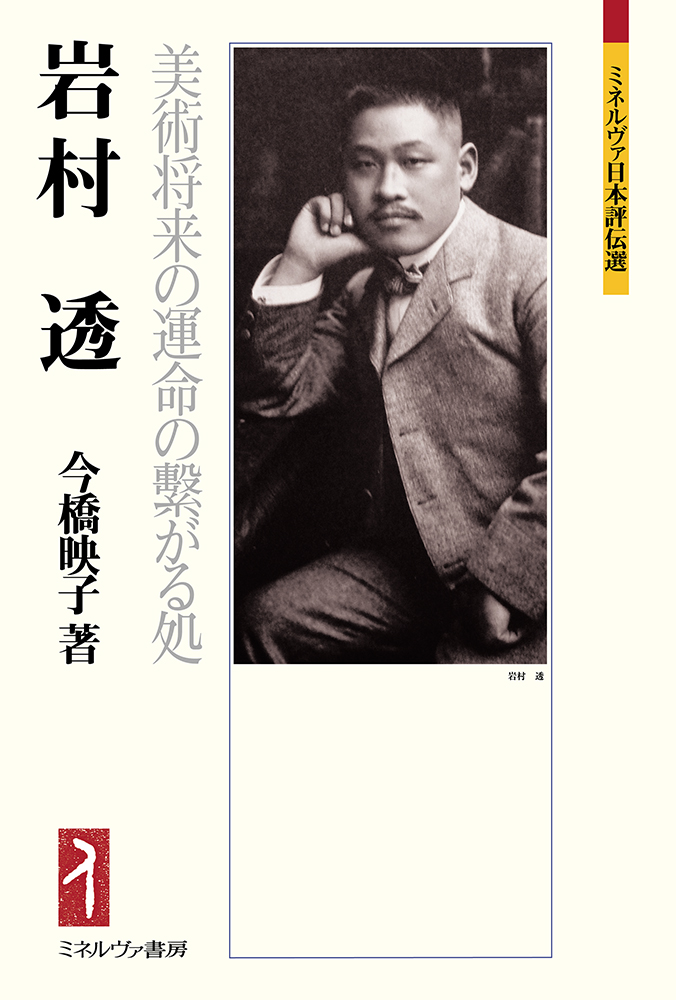
Minerva Japanese Biography Series Iwamura Tōru (At the Crossroads of the Future of Art)
Size
360 pages, 127x188mm
Language
Japanese
Released
April 10, 2026
ISBN
9784623100293
Published by
Minerva Shobō
Book Info
See Book Availability at Library
Japanese Page
History is shaped not only by its celebrated figures, but also by those whose achievements have gradually faded from view. Often, historical research rediscovers such a person, and compels us to rethink an entire intellectual landscape. Tōru Iwamura (1870–1917) is one of those figures. He is remembered, if at all, as an art critic associated with the painter Kuroda Seiki, and acquainted with the novelist Mori Ōgai. However, he was actually a central figure in the formation of modern Japanese art thought.
My interest in Iwamura began with a simple question: Why had someone so visible during his own lifetime become almost invisible in later histories? That question eventually led to more than a decade of archival research and culminated in my two-volume study, Artistic Thought in Modern Japan - Art critic Toru Iwamura and his era (Hakusuisha, 2021), comprising approximately 1,500 pages. This new volume distils those findings into a biography intended not only for specialists, but also for readers interested in the cultural history of modern Japan.
Born into a baronial family in Tokyo, Iwamura studied in the United States and France before becoming Japan's first professor to teach Western art history systematically at the Tokyo School of Fine Arts. At the same time, he was an influential art journalist, a prolific essayist, and an energetic public intellectual. His writings introduced Japanese readers not only to European art but also to the broader social thought of John Ruskin and William Morris, whose ideas about the relationship between art, labor, and society profoundly shaped his own vision.
Unlike many of his contemporaries, Iwamura refused to confine art to painting and sculpture. Together with the art journalist Sakai Saisui, he argued that architecture, crafts, and the decorative arts deserved equal critical attention because they formed the artistic environment of everyday life. He also helped establish the Kokumin Bijutsu Kyōkai (Société Nationale des Beaux-Arts), bringing together painters, architects, writers, and other creators to advocate artists' rights and encourage collaboration across disciplines. Long before such ideas became commonplace, Iwamura understood that art belonged not only to museums but also to society itself.
Yet, his career ended abruptly. His liberal convictions placed him at odds with the increasingly restrictive political climate surrounding the High Treason Incident. After being removed from his academic position while suffering from diabetes, he died in 1917 at the age of forty-eight. Therefore, his disappearance from Japan's cultural memory was not simply accidental; it reflected the broader suppression of liberal thought during the late Meiji period.
This book argues that Iwamura should be understood not simply as an art critic, but also as a theorist of art and society, whose writings, teaching, journalism, and cultural activism together shaped the intellectual foundations of modern Japanese art. I hope this biography will encourage readers to encounter Iwamura anew, and to reconsider the intellectual foundations of modern Japanese art.
(Written by IMAHASHI Eiko, Professor, Graduate School of Arts and Sciences / 2026)
