


 Find a book


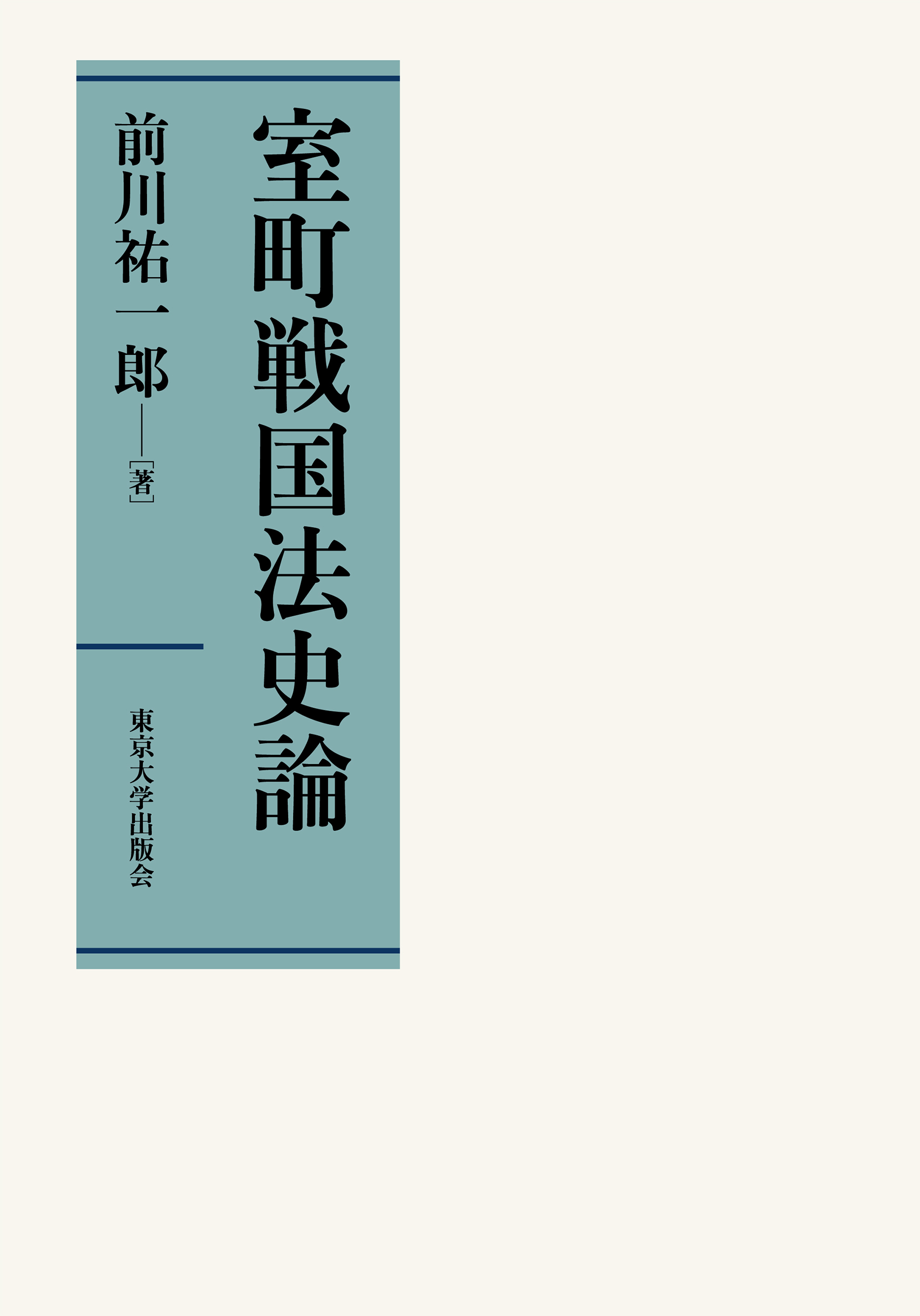
Title
Muromachi Sengoku Hoshiron (Law in Muromachi and Sengoku Japan)
Size
306 pages, A5 format
Language
Japanese
Released
March 27, 2025
ISBN
978-4-13-026614-7
Published by
University of Tokyo Press
Book Info
See Book Availability at Library
Japanese Page
 eBook
eBook
When one thinks of laws from the Muromachi and Sengoku periods, one might recall the tokuseirei (decrees of amnesty) of the Muromachi shogunate and the provincial laws of the Sengoku daimyo, which Japanese students study in high school. This book also contains essays on these laws.
However, the tokuseirei of the Muromachi shogunate were issued (and promulgated in large numbers) in response to the demands of peasant uprisings, and they signaled the decline of the shogunate’s power. Meanwhile, the provincial laws of the Sengoku daimyo signaled the emergence of powerful political power, as symbolized by the provision that both parties are punished in a dispute. What can we learn from discussing laws of seemingly opposite nature in the same book? This is probably one of the first questions that might be asked.
Naturally, both the tokuseirei of the Muromachi shogunate and the provincial laws of the Sengoku daimyo were premised on the laws, customs, and methods of resolving incidents and disputes that were unique to the middle ages. Medieval laws and customs differed greatly between "central laws" and "provincial laws." For example, local or private tokusei orders, with rules different from those of the shogunate's tokusei orders, were put into practice in society. Furthermore, medieval disputes and incidents were often resolved not through court cases administered by public authorities such as the shogunate or daimyo, but through self-help by the victims, reconciliation between the parties, or third-party mediation. In contrast, the laws of the Sengoku daimyo, in particular, strongly favored judicial resolution. These are roughly the "premises" that have been clarified so far.
Based on these medieval laws, customs, and unique methods of dispute resolution, this book attempts to reexamine the Muromachi shogunate's tokuseirei and erizenirei (ordinances on the selection of coins), as well as the police and criminal trial laws of the Sengoku daimyo, in line with the thinking of people at the time, using clues such as the format of the issuance of laws and regulations and the wording of legal texts.
For example, while the Muromachi shogunate's tokuseirei primarily targeted the "higher" classes as a judicial law, it also interfered with the rules for the recovery of collateral between parties, including peasant uprisings (Part I, Chapters 1 and 2). Furthermore, the laws of the Sengoku daimyo and the Oda government were based on customary law, which allowed victims to recover stolen goods (even if they had already been sold) free of charge if they investigated, identified, and arrested the perpetrator themselves; there was no sign of any opposition to victims' efforts to investigate and arrest the perpetrator themselves (Part III, Chapter 4).
Thus, what emerges from the several Muromachi and Sengoku laws and customs discussed in this book is another stance taken by public authorities during this period, which not only tolerated to a certain extent victims' self-help efforts and dispute resolution through negotiation between the parties, but also sought to use these methods to maintain peace and order. Further examination of this stance in conjunction with the approach to judicial coercion may enable us to more deeply explore the process whereby public authorities integrated and organized the autonomy and independence of various groups during this period.
(Written by MAEGAWA Yuichiro, Associate Professor, Historiographical Institute / 2025)