

 Find a book


Title
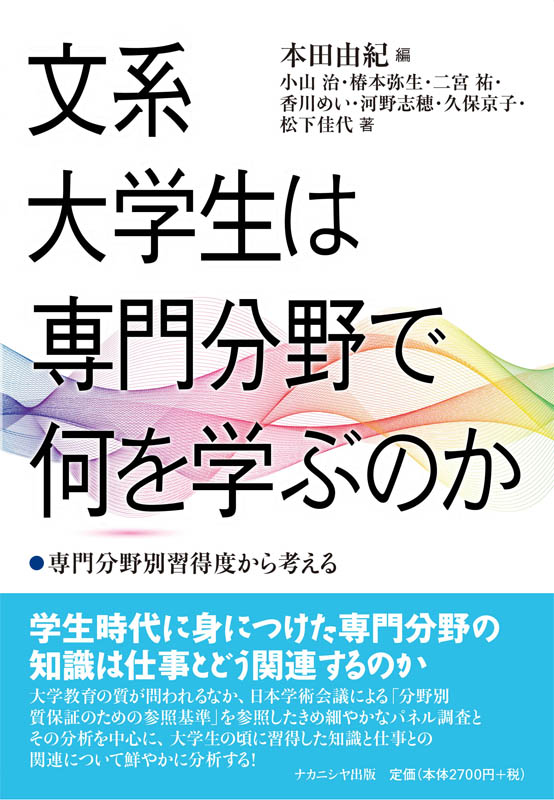
Bunkei Daigakusei ha Senmonbunya de Nani wo Manabunoka (What do liberal arts university students learn in their specialized fields? - From the perspective of mastery level in each specialized field)
Size
220 pages, A5 format
Language
Japanese
Released
March 31, 2025
ISBN
9784779518546
Published by
Nakanishiya Shuppan
Book Info
See Book Availability at Library
Japanese Page
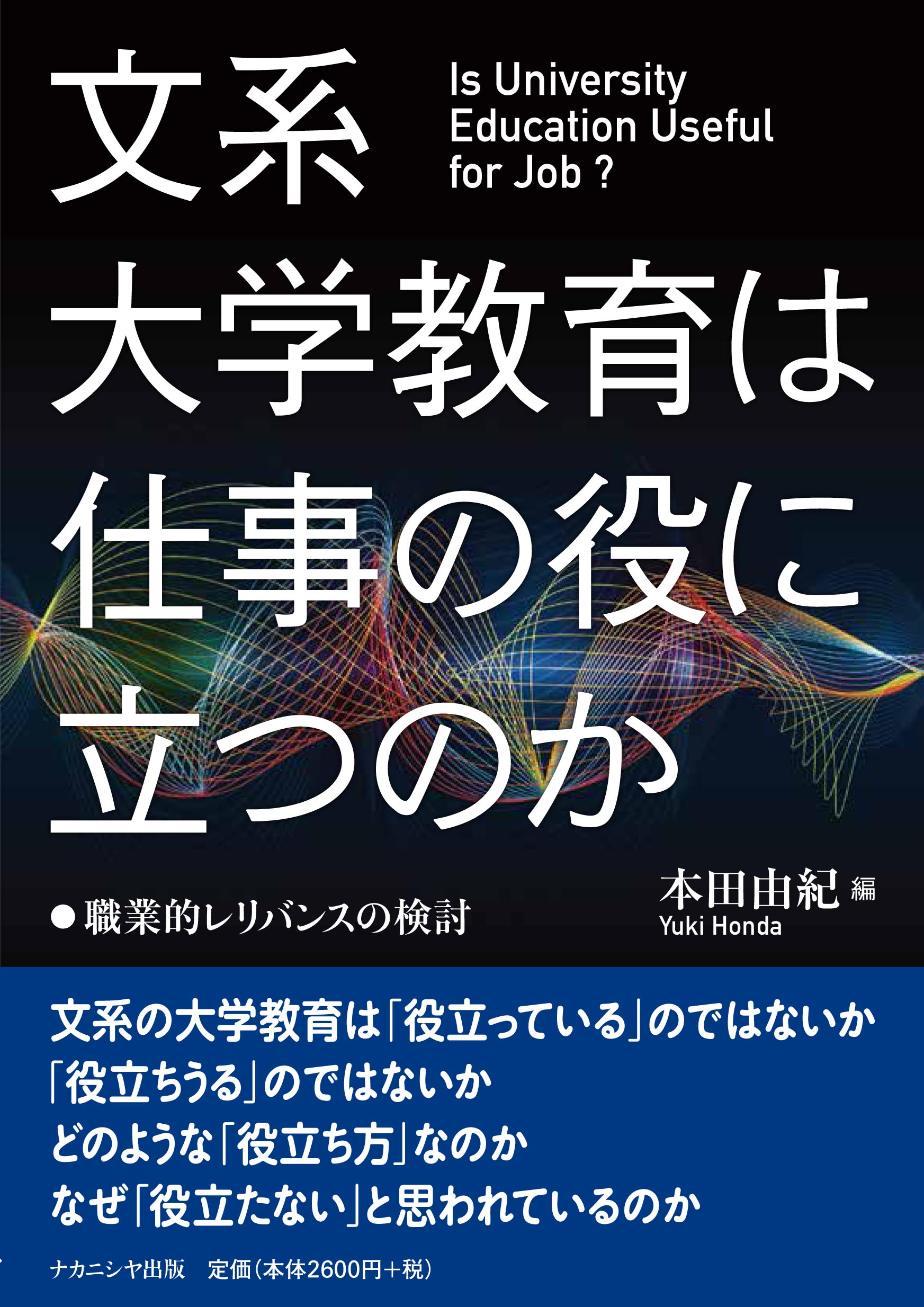
This white-covered book, “What Do Liberal Arts University Students Learn in Their Specialized Fields?” is the result of a research project that follows on from the black-covered book, “Is a Liberal Arts University Education Useful for Work?” (Nakanishiya Publishing), published in 2018.
The overall rise in higher education enrollment rates in both developed and late-developing countries indicates that higher education can no longer be viewed as a monolithic entity. Not only do multiple types of educational institutions exist within higher education, but even within a single university category, vertical (prestige, history, difficulty of admission, etc.) and horizontal (academic fields) differentiation is progressing. Research on horizontal differentiation has expanded to encompass broad field categories to understand variations in career choices, educational effectiveness, and post-graduation careers; however, few studies have focused on the finer-grained academic field level or university education’s impact in each specialized field on post-graduation outcomes.
In response to this situation, following on from the previous Black Book, this White Book focuses on specific academic fields within the humanities and social sciences (commonly known as the liberal arts) (e.g., law, history, literature/linguistics, sociology, psychology, etc.), conducting a follow-up survey from students’ final year of university to several years after graduation. The primary difference between previous and current projects is the development and use of unique subject-specific “mastery” items to grasp the content acquired in each field. These “mastery” items are based on the “Reference Standards for Curriculum Design for Field-Specific Quality Assurance of University Education” (https://www.scj.go.jp/ja/member/iinkai/daigakuhosyo/daigakuhosyo.html), which were developed by the Science Council of Japan. We incorporated the content described in each field into the questions. By asking final-year university students these questions, we were able to understand the content that each student had acquired in their respective fields and examine the validity of the aforementioned “reference standards.” The White Book presents the results of the analysis of the collected data as comprehensively as possible. Each chapter in Part I analyzes the distribution of responses to the “mastery” items, their determinants, and their impact on post-graduation professional skills and perceptions of university education. Part II broadens the scope beyond “mastery” to examine issues related to current university education in Japan, such as changes in entrance examination methods, the effects of university policies, qualification acquisition behavior, and graduate school admissions.
While I encourage you to refer to the book for specific findings, I would like to emphasize one point: the study found that “mastery” in each specialized field—that is, the results of earnest study and the acquisition of specialized knowledge—has an overall positive impact on professional skills, social awareness, and views on university, even if students do not necessarily end up in a job that matches their specialty after graduation. This may seem obvious, but I believe I have, following on from the Black Book, to a certain extent, succeeded in refuting the argument that “a liberal arts university education is useless.”
As detailed in the final chapter, Chapter 11, the “mastery” items used in this White Book are unique, as they are indirect assessments of each field, and as such, they are indicators that possess both merits and limitations. This is not a direct assessment using tests or other methods, nor does it attempt to capture general behavioral characteristics or so-called competencies. The merits and demerits of focusing on the content of each academic field and understanding it through self-assessment by respondents remain open to debate. However, the purpose of this project, which chose to use such indicators, was to reiterate the importance of mastering content in the face of the current trend toward competencies such as non-cognitive abilities. Educational institutions can teach content, whereas competencies are merely expected outcomes to be acquired secondary to that process and through educational methods. It is hoped that this book will serve as a catalyst for the further development of content-based pedagogical considerations in university education.
(Written by HONDA Yuki, Professor, Graduate School of Education / 2025)