

 Find a book


Title
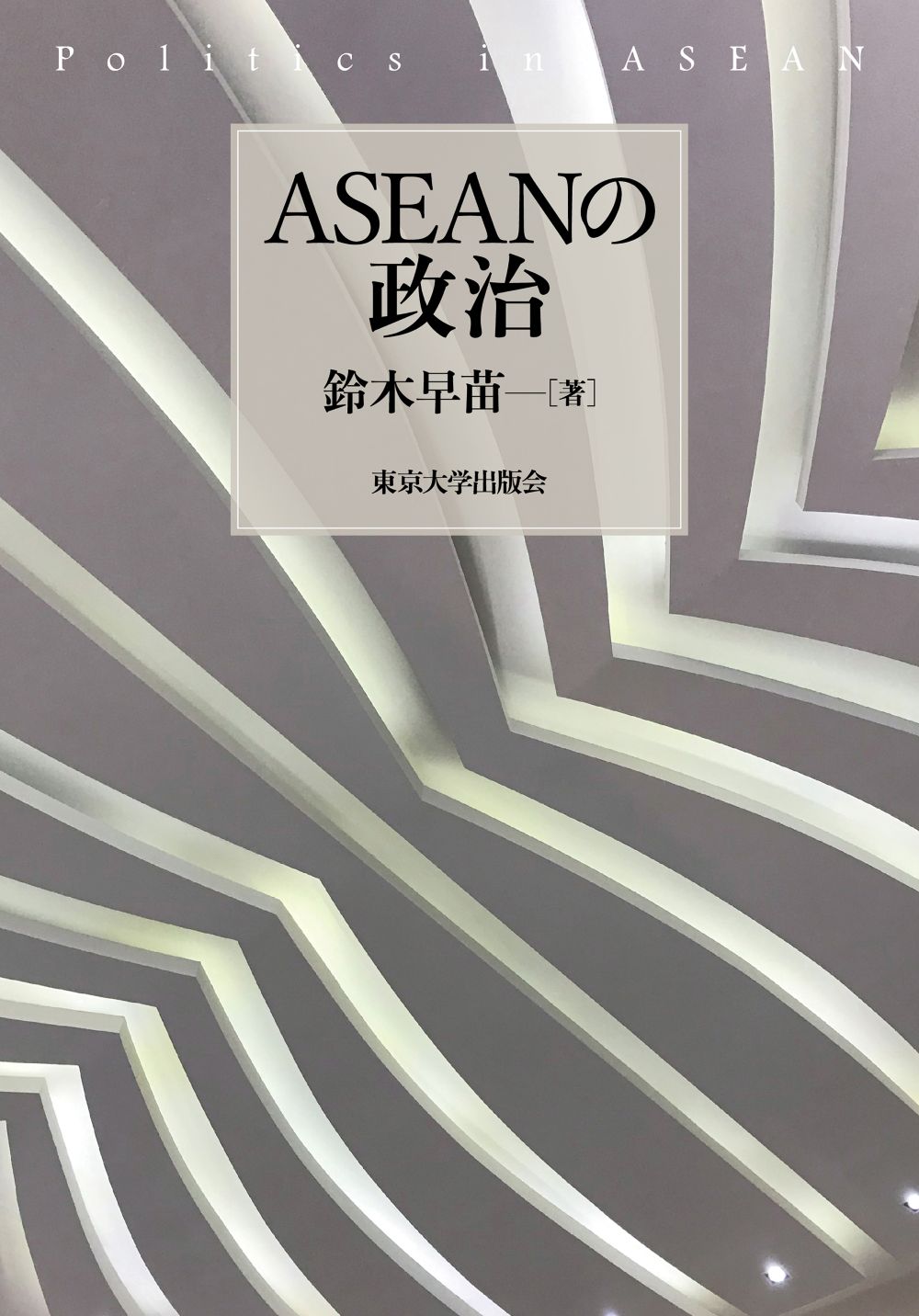
ASEAN no Seiji (Politics in ASEAN)
Size
224 pages, A5 format
Language
Japanese
Released
July 23, 2024
ISBN
978-4-13-030192-3
Published by
University of Tokyo Press
Book Info
See Book Availability at Library
Japanese Page
 eBook
eBook
The Association of Southeast Asian Nations (ASEAN) is an international (or regional) organization established in 1967. Most Southeast Asian countries gained independence after World War II, and shortly thereafter, they agreed upon the founding of ASEAN. The Initial members were five countries—Indonesia, Malaysia, the Philippines, Singapore, and Thailand. Brunei jointed later, followed by Vietnam, Laos, Cambodia, and Myanmar after the Cold War. In 2025, Timor-Leste joined, bringing the total to eleven.
This book examines the characteristics of ASEAN as a regional organization from the perspective of sovereignty constraints and discusses the politics of conflict and cooperation among member states. Sovereignty is a recognized right in the international system that ensures that all states are equal and have exclusive control over their internal affairs. The principle of non-interference is an internationally recognized principle asserting that states should not interfere in the internal affairs of other states (although this principle is often violated).
How sovereignty is constrained has been analyzed in studies on international organizations to explain their institutional and organizational aspects. Increasing cooperation often requires sovereignty constraints. While the European Union (EU) has deepened cooperation by delegating authority to supranational organizations and adopting majority voting, this book argues that ASEAN is pursuing a different approach to limiting sovereignty.
ASEAN has not only survived for over 50 years since its founding but has also expanded its areas of cooperation. Economic integration is a prime example. It works to promote the free movement of goods, services, capital, and people. It also advances integration beyond Southeast Asia, including the conclusion of free trade agreements with countries outside the region. However, issues continue to persist that ASEAN, as an organization, has not adequately resolved, such as territorial disputes in the South China Sea and the democratization process in Myanmar. Considering this situation, some studies on ASEAN have evaluated its role positively, whereas others have pointed out its shortcomings. Nonetheless, they all share the view that, unlike the EU, ASEAN is a regional organization that values sovereignty and adheres to the principle of non-interference in internal affairs. However, examining the actual state of cooperation by sector reveals that cooperation is progressing, albeit to varying degrees, under sovereignty constraints. This book discusses this point with reference to other regional organizations. I believe that adopting a comparative perspective allows for the identification of the unique characteristics of ASEAN. The constraints on sovereignty within ASEAN shows that there are many different ways to restrict sovereignty.
(Written by SUZUKI Sanae, Professor, Graduate School of Arts and Sciences / 2025)
Related Info
The 41th Masayoshi Ohira Memorial Prizes (Masayoshi Ohira Foundation Feb 3, 2025)
https://ohira.org/eng/2025/07/29/41-ohira-award-rial-prizes/