


 Find a book


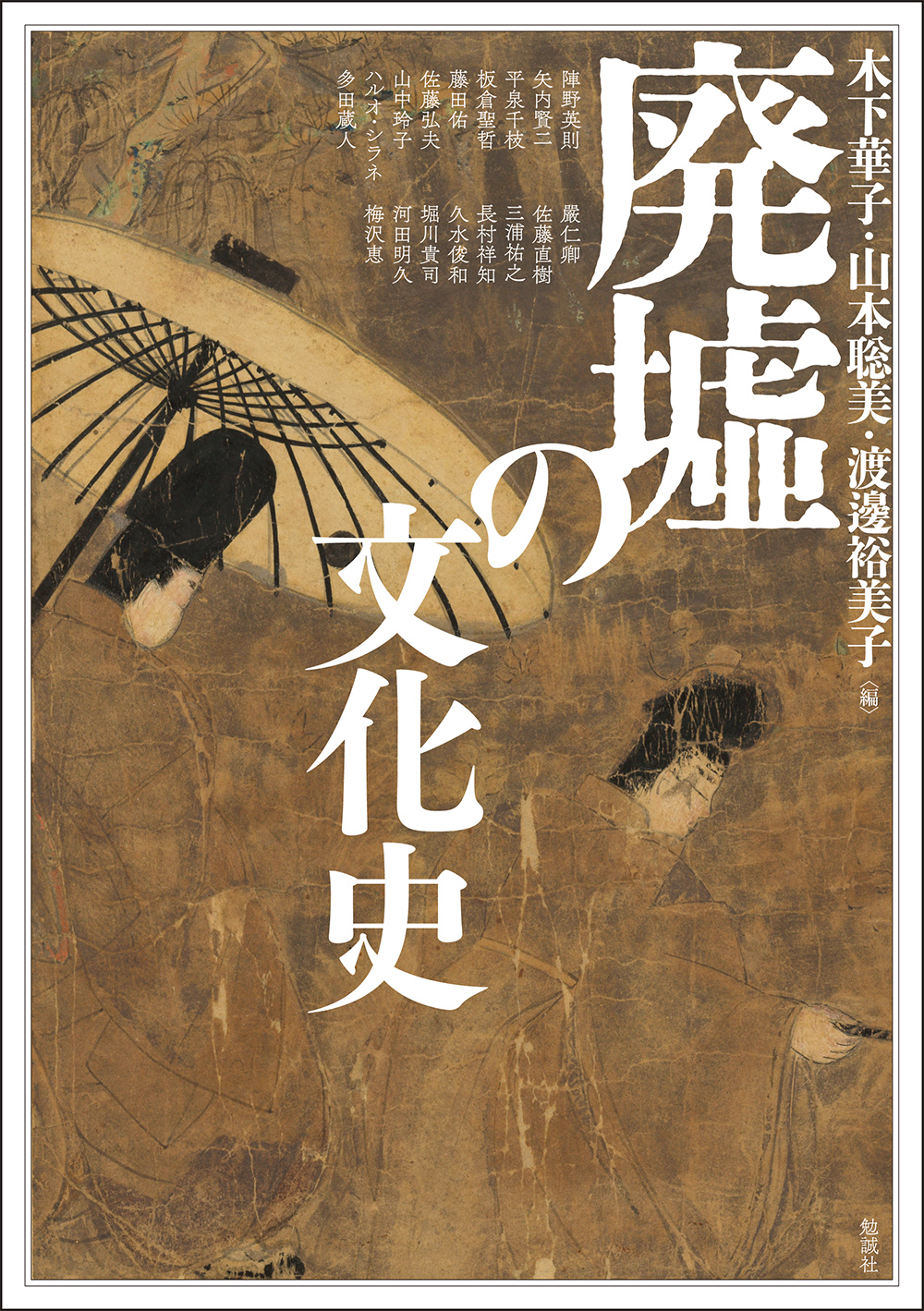
Title
Asia Yugaku 297 Hikyo no Bunkashi (A Cultural History of Ruins)
Size
288 pages, A5 format, softcover
Language
Japanese
Released
October, 2024
ISBN
978-4-585-32543-7
Published by
Benseisha Publishing Inc.
Book Info
See Book Availability at Library
Japanese Page
In contemporary Japan, “ruins” have become something of a craze. For example, sites such as Gunkanjima—a modern industrial heritage site—as well as amusement parks and hotels in declining tourist destinations and abandoned villages and schools resulting from population decline captivate our imaginations, giving rise to a social phenomenon that is widely discussed. In this context, what is generally regarded as a “ruin” tends to be structures dating from the modern era or later, and the ruin craze is often viewed as a distinctly contemporary phenomenon.
However, the scope of “ruins” is much broader. In Europe, interest in ancient ruins grew from the mid-16th century onward, establishing them as subjects in painting and leading to a substantial body of scholarship. These research trends have been embraced in Japan, and since the 2000s, efforts have been made to construct a theory of ruins while introducing Western European theories on this subject. Nevertheless, discussions on ruins in Japan have typically focused on the modern era and beyond, with very little attention paid to the cultural representations of premodern Japan. However, considering the history of Japanese literature and culture, the *Man'yōshū* includes Kakinomoto no Hitomaro’s “Ōmi Kōto ka,” which laments the ruin of Ōtsu Palace, and *The Tale of Genji* features the “Nanigashino-in,” the setting for Lady Yūgao’s final moments. The *Hōjōki* describes the capital falling into ruin due to five disasters that occurred in the late Heian period, and scenes of desolation are depicted in numerous paintings, such as the *Saigyō Monogatari Emaki* and the *Ippen Shōnin Engi-e*. It can be said that the framework of “ruins” holds significant value when considering the history of premodern Japanese literature and culture.
Based on this research, this book aims to expand the study of “ruins.” It features essays by 20 scholars from Japan and abroad specializing in early, medieval, and modern Japanese literature; Japanese art history; medieval Japanese history; religious studies; and Western art history. The goal is to establish an interdisciplinary “theory of ruins” and to create a platform for future research in this field.
Part One, “The Scope of Ruin Theory,” contains essays that focus on the functions of “ruins.” For example, these essays examine the driving force that moves back and forth along the timeline of the past, present, and future, creating scenes, narratives, and themes; creativity that restores authenticity and generates ideal newness and historical value; and the enlightening quality that embodies humanity’s gaze toward the future. You will surely be able to experience the functions of “ruins”—both as a concept and as an artistic endeavor.
Part Two, “The Space-Time of Ruins,” contains essays focused on representational analysis. These include, for example, an examination of how symbolic representations of “ruins” manifest in Japan, as seen in sites such as Kawara-no-in and Henjo-ji. They also explore the potential of the body as a space capable of realizing narratives of reconstruction and recovery inherent in “ruins.” Through these essays, you will gain an understanding of the diversity and dynamic evolution of “ruins.”
Part Three, “Living in Ruins,” brings together essays that explore people’s lives amidst the actual devastation caused by war and natural disasters. For instance, when we view Kyoto after the Jōkyū Rebellion or the ruins of the Imperial Palace in the Middle Ages as “ruins,” we can see that they possess the power of regeneration. In Goshan literature, “ruins” appear, bearing the memory of Chinese literature. Amid the “ruins” of World War II, war artists painted with a vision in mind. In Japan, a nation beset by war, natural disasters, and numerous social upheavals, it becomes clear that people have constantly confronted “ruins” and have moved forward while incorporating them into society.
Since this book features scholars from a wide range of fields—including literature, history, art history, and religious studies—discussing the concept of “ruins,” we hope you will approach it with an open mind. In Japan, often referred to as the “Archipelago of Disasters,” and in a world where war continues unabated, recovery and regeneration from “ruins” remain a constant contemporary challenge. I would be delighted if, through this book, you could come to understand the prayers for regeneration and recovery that “ruins” embody, as well as the potential to face difficulties and nurture something new.
(Written by KINOSHITA Hanako, Professor, Graduate School of Humanities and Sociology / 2026)