


 Find a book


Title
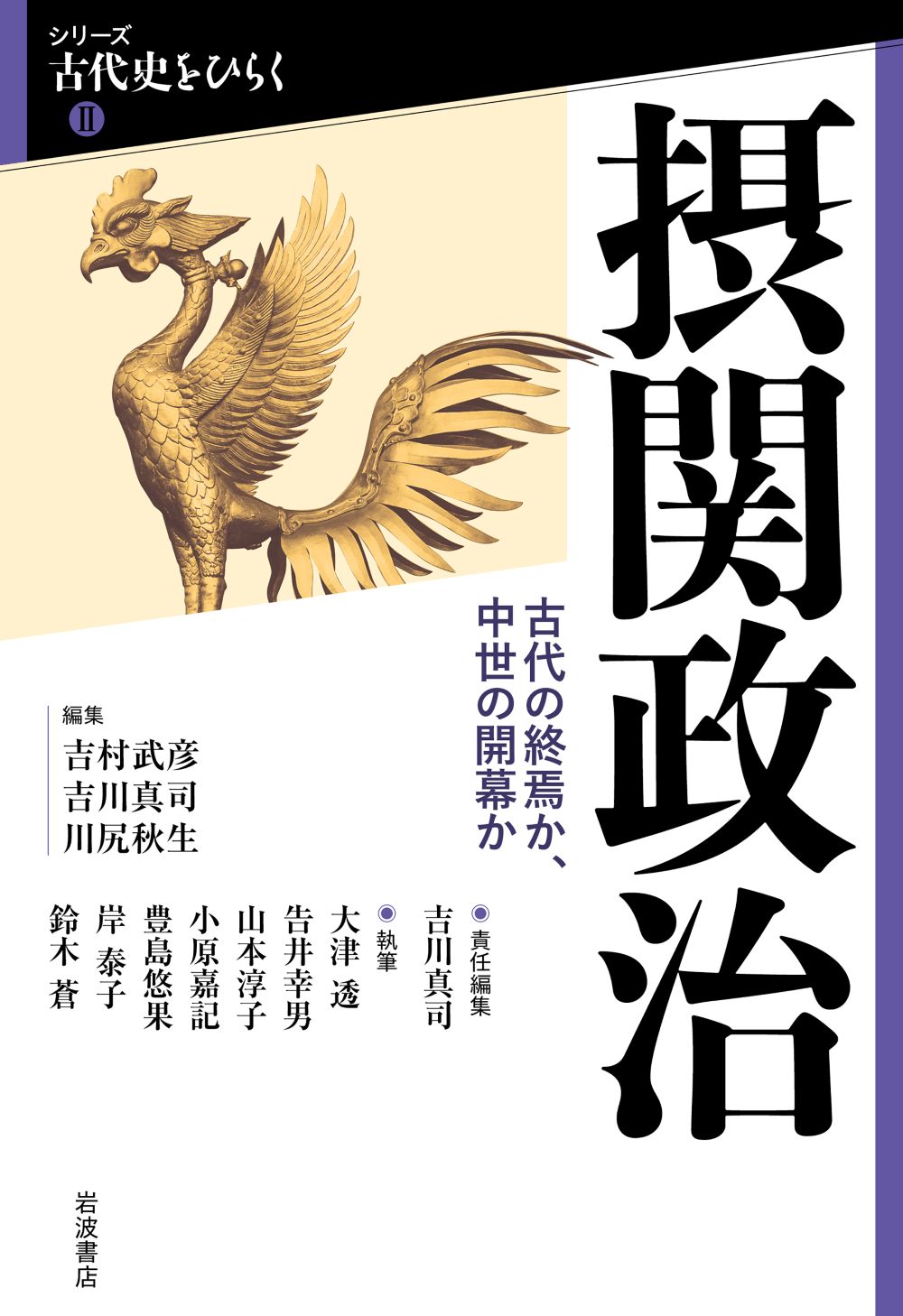
Opening Up Ancient History II Sekkan Seiji (Regency Politics - The End of the Ancient Period or the Start of the Medieval Period?)
Size
366 pages, 127x188mm, softcover
Language
Japanese
Released
November 28, 2024
ISBN
9784000286404
Published by
Iwanami Shoten
Book Info
See Book Availability at Library
Japanese Page
This book is part of Iwanami Shoten’s series “Opening Up Ancient History.” It is an attempt to gain a grasp of the realities of “Regency politics,” centred on the era of Fujiwara no Michinaga, by taking into account recent advances in research and analyzing it from the twin perspectives of whether to regard it as the end point in the development of the ancient state or as the beginning of medieval-style politics.
The book opens with an introduction titled “Thinking about ‘Regency Politics’” by Yoshikawa Shinji, the editor-in-chief. Having first summarized the history of research on the subject from the Meiji era to the 1990s, he identifies some future issues and explains the structure of the book.
The essay “Regency Politics as Politics of the Ancient Period” by Ōtsu Tōru provides the focal point for the discussions in this book. When the young emperor Seiwa was born in the ninth century, Fujiwara no Yoshifusa supported the young ruler as sesshō (regent for a minor emperor), and upon Seiwa’s abdication he appointed Fujiwara no Mototsune as kanpaku (regent for an adult emperor). This marked the beginning of the positions of sesshō and kanpaku, and Ōtsu traces the political process through the establishment of the Regency (sekkan) system during the time of Fujiwara no Tadahira in the mid-tenth century to the era of Fujiwara no Kaneie and Fujiwara no Michinaga in the late tenth century. He then analyzes the jin no sadame, a consultative assembly of high-ranking nobles that dealt with the central and most important government business in Regency politics, and noting that it was convened to discuss issues pertaining to the nucleus of the state, he takes up deliberations on petitions from provincial administrators (zuryō), deliberations for assigning specific palace buildings to provinces when constructing the imperial palace, and assessments of a provincial administrator’s performance by nobles at the end of his term and argues that the control of provincial administrators was a major topic of discussion for the jin no sadame. Ōtsu maintains that the commencement of these meetings pertaining to provincial administrators in the second half of the tenth century marked the establishment of the jin no sadame and represented a turning point in Regency politics. While Michinaga refused to relinquish his position as council leader (senior minster of the left), this was a system that at the same time allowed senior councillors (dainagon) and middle councillors (chūnagon) to share and carry out various administrative duties as presiding nobles, and Regency politics was established atop the politics of the Grand Council of State (dajōkan), which was based on an alliance of nobles who shared administrative responsibilities.
The essay “Regency Politics as Medieval Politics” by Tsugei Yukio presents a counterargument. He argues that within the personnel system the personal authority of nobles to nominate officials and so on expanded and the networks of aristocratic society assumed great significance. Within the bureaucracy, too, personal authority expanded, leading to a blurring of public and private boundaries and an expansion of the private spheres of nobles. Consequently, Tsugei positions the jin no sadame as a venue for reconciling the interests of nobles, and he argues that Regency politics represented the beginning of a decentralized form of politics centred on powerful families.
The essay “The Rule and Service of Provincial Administrators” by Kohara Yoshiki provides an institutional positioning of provincial administrators, who underpinned Regency politics, and as well as touching on shifts in the fiscal structure, he also clarifies concrete aspects of provincial administrators and their wives with reference to the literature of this period. The book also includes Yamamoto Junko’s “‘Empresses’ and the Literature of Court Ladies” and Toyoshima Yuka’s “The Transformation of the System of Government and Foreign Relations in the Early Koryŏ Period” and ends with “A Roundtable Discussion: Was the Regency Period Ancient or Medieval?” which features the contributors.
(Written by OTSU Toru, Professor, Graduate School of Humanities and Sociology / 2026)

