

 Find a book


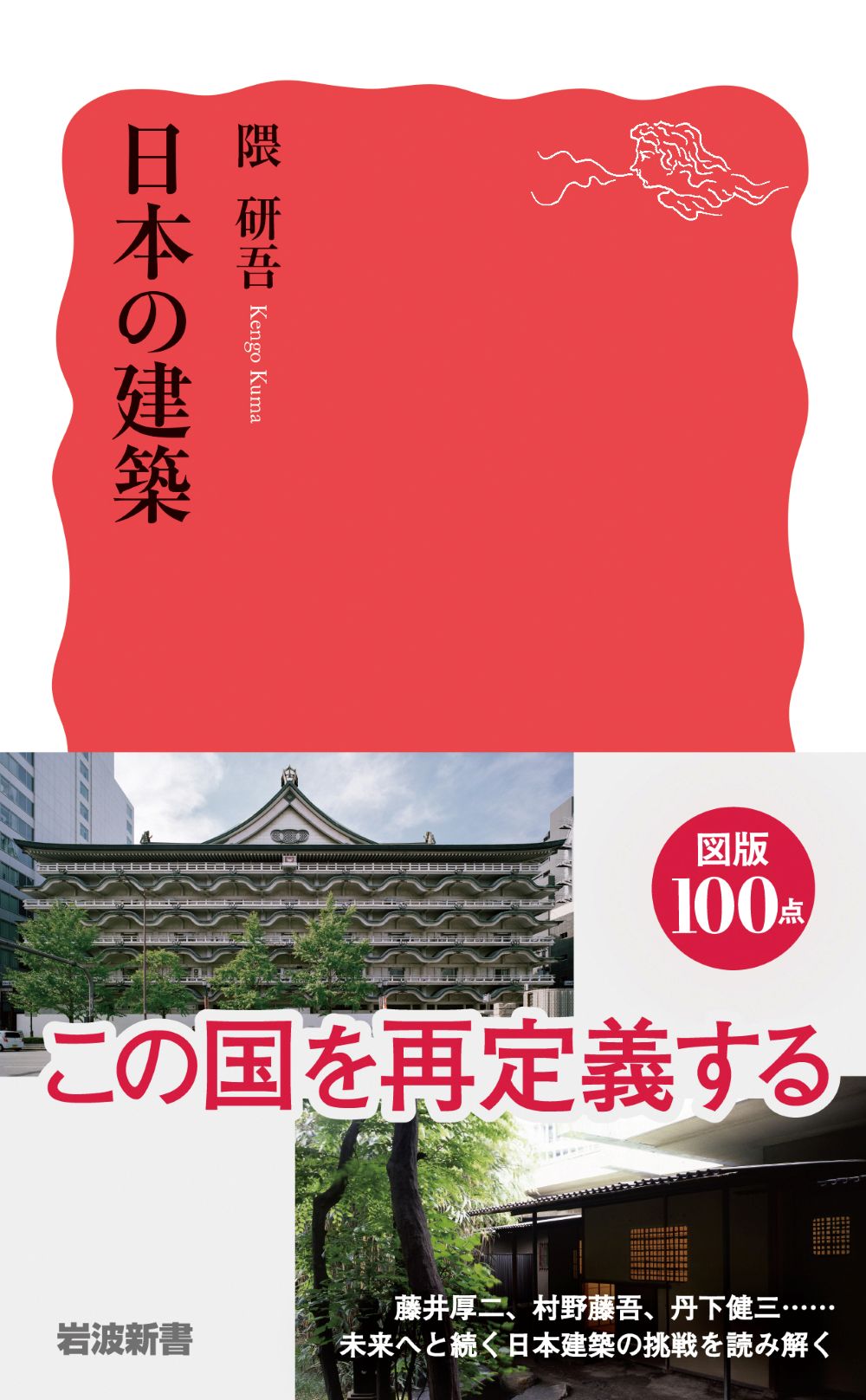
Title
Iwanami Shinsho 1995 Nihon no Kenchiku (Architecture of Japan)
Size
270 pages, paperback pocket edition
Language
Japanese
Released
November 29, 2023
ISBN
9784004319955
Published by
Iwanami Shoten
Book Info
See Book Availability at Library
Japanese Page
I sense that interest in Japanese architecture is reaching an unprecedented peak. One reason for this is an intuitive expectation that the various forms of wisdom and technology found in traditional Japanese architecture may provide a solution to the global environmental crisis.
Among the traditional architectures of East Asia, including those of China and South Korea, Japanese architecture is considered particularly sustainable. This perception stems primarily from the country's limited land area and high population density. While high density was once a unique condition imposed specifically upon the small nation of Japan, the modern world is now coming to share this challenge. In this context, Japan appears as a "miracle"—a place that has managed to maintain a comfortable living environment despite its density, all while preserving an astonishingly high forestation rate of 70% without destroying its woodlands.
To the question of whether the secret behind this miracle lies in the Japanese lifestyle and an architectural design that is inseparable from it, we Japanese must provide scientific and aesthetic answers. This was a primary motivation for me to begin writing this book. In that sense, the objective of this work is to build a bridge between science and aesthetics; my underlying critique of traditional Japanese architectural discourse—which has largely been an aesthetics-centered discussion of "style"—serves as the foundation for its pace.
At the same time, the uniqueness of this book lies in its rejection of "origin-oriented" or "source-oriented" thinking. Discussions regarding "Japan-ness" tend to fall easily into the pattern of claiming, "Here lies the true origin of Japan." Such a mindset breeds the typical Japanese situation where numerous "schools" (iemoto) proliferate, often leading to a rigidity of thought. Here, I have thoroughly excluded this search for origins. I have gone so far as to redefine even the Ise Grand Shrine—long regarded as the ultimate "origin"—as a product of eclecticism.
I recognize that the Western way of thinking, which rejects eclecticism, also forms the basis of Modernist architecture. Consequently, Modernism and Japanese architecture have maintained a strange sort of complicity. My aim is to liberate Japanese architecture from this fundamentalist "school-like" mentality and redefine it as a realm of free diversity. It is the author's dream to create a free forum where a diverse range of people—including Westerners, scientists, and engineers who have begun to take an interest in Japanese architecture—can participate.
(Written by KUMA Kengo, University Professor / Professor Emeritus, Office of University Professor, School of Engineering / 2026)
Related Info
SEE TOKYO THROUGH THE EYES OF ARCHITECT KENGO KUMA (“TOKYO” March, 2023)
https://timelesstokyo.com/article/cat_experttips/kengokuma