


 Find a book


Title
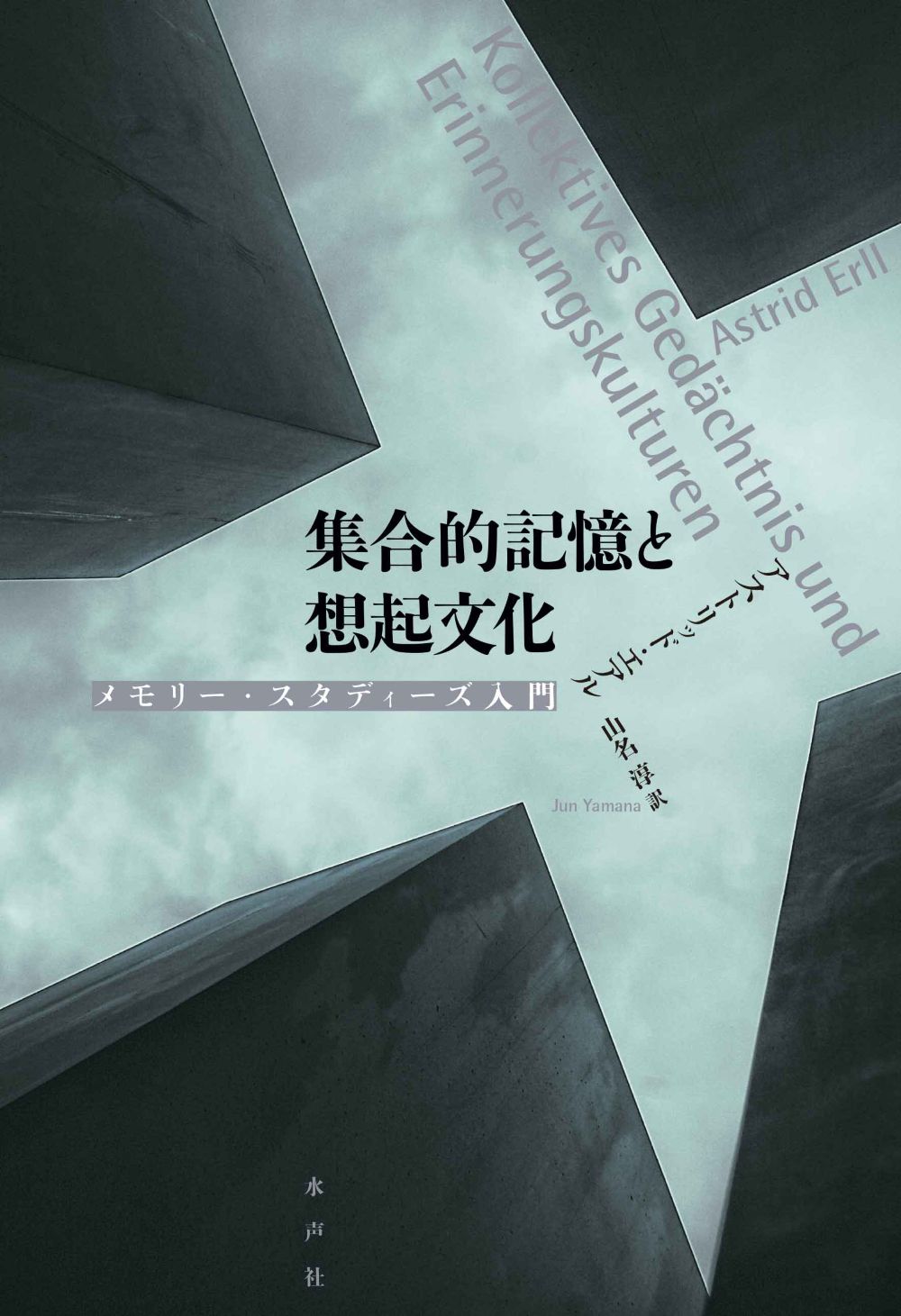
Kollektives Gedächtnis und Erinnerungskulturen : eine Einführung Shūgō-teki Kioku to Sōki Bunka (Collective Memory and Remembrance Culture - An Introduction to Memory Studies)
Size
338 pages, A5 format
Language
Japanese
Released
August, 2022
ISBN
978-4-8010-0662-1
Published by
Suiseisha
Book Info
See Book Availability at Library
Japanese Page
Memory is intrinsically rooted in personal, individual experience—or so we typically understand it. Yet, a moment’s reflection reveals that it is not quite so simple. Consider, for instance, listening as a child to the stories told by your grandparents. As you picture scenes from an era before you were born, the significance of that past quietly weaves itself into your own memory. Such memories cannot be neatly categorized as belonging purely to the "inside" or the "outside." In the field of Memory Studies, the meaning of the past that resides in the space between "me" and "us" is called "collective memory."
Collective memory is not formed solely through conversations with elders. Watching classic films, walking through city streets to visit memorials, taking in historical monuments, or participating in annual commemorative events—through these experiences, we integrate a past that extends far beyond our personal lives into our own memories. While the collective memory generated in this way fosters a sense of community among people, it can also draw boundaries between "us" and "them," serving as a catalyst for casting others as outsiders. In this sense, collective memory is both a rich and an inherently complex phenomenon.
This book uses "collective memory" as a key concept, offering a clear and systematic presentation of the theoretical frameworks required to comprehend the world through this lens. The author, Astrid Erll, carefully maps out the foundations of collective memory research across a wide range of academic disciplines, including sociology, psychology, history, art theory, literary studies, and media theory. Because collective memory theory transcends any single discipline, different scholars often operate with varying definitions and images of "memory," making it entirely understandable if newcomers to the field feel bewildered. Indeed, Erll herself speaks candidly in the book about this difficulty: frustrated by the absence of an introductory text outlining the basics, she resolved to write one herself. Having experienced the exact same bewilderment, I was deeply moved by her determination, which inspired me to translate this book into Japanese.
The greatest reward of this book lies in how acquiring the shared vocabulary of "collective memory" enables dialogue with researchers across different fields. My own specialization is in the philosophy of education and the history of educational thought; however, through this common language, I have been able to engage in rich discussions with experts in literary theory, theatre studies, communication studies, and media theory. I sincerely hope that readers will experience this same intellectual joy. Richly illustrated with diagrams and tables to aid understanding, the book primarily draws on European and American examples. Japanese readers will find ample room to apply these theoretical frameworks to familiar examples of their own, making for a deeply engaging intellectual pursuit.
(Written by YAMANA Jun, Professor, Interfaculty Initiative in Information Studies, Graduate School of Education / 2026)
Table of Contents
Einleitung: Warum ›Gedächtnis‹?
Die Erfindung des kollektiven Gedächtnisses: Eine kurze Geschichte der kulturwissenschaftlichen Gedächtnisforschung
Gedächtnisse: Disziplinspezifische Zugänge und interdisziplinäre Vernetzungsmöglichkeiten
Kollektives Gedächtnis und Erinnerungskulturen: Ein kultursemiotisches Modell
Medien und Gedächtnis
Literatur als Medium des kollektiven Gedächtnisses
Erzähltheoretische Kategorien: Die Rhetorik des kollektiven Gedächtnisses
Anhang
Related Info
Astrid Erll “Kollektives Gedächtnis und Erinnerungskulturen” published by J.B. Metzler Stuttgart, 2017
https://link.springer.com/book/10.1007/978-3-476-05495-1
Related Article:
Culture as Human, Culture as Network: On the Theory of Bildung based on Memory Studies - Jun Yamana (The University of Tokyo) (E-Journal of Philosophy of Education: International Yearbook of the Philosophy of Education Society of Japan Vol. 8, p.37-48 October 1, 2023)
https://pesj.sakura.ne.jp/english/englishjournal.html
https://pesj.sakura.ne.jp/english/vol_08_Yamana_37-48.pdf