



About the lecturer
| Naosuke Mukoyama is an Associate Professor of Global Governance at the Institute for Future Initiatives, University of Tokyo. His research examines the emergence and development of the sovereign state, covering state formation, resource politics, and historical international relations. He is the author of Fueling Sovereignty: Colonial Oil and the Creation of Unlikely States (Cambridge University Press, 2024). His work has appeared in European Journal of International Relations, Comparative Politics, and Democratization, among others. Before joining UTokyo, he was a Postdoctoral Fellow at the Department of Politics and International Studies at the University of Cambridge. He received his DPhil (Ph.D.) from the University of Oxford, and his MPhil and LLB from the University of Tokyo. | 
Assoc. Prof. Naosuke MUKOYAMA
|
Syllabus
| 1 | Subject | Politics of Natural Resources and Environment: The "Resource Curse" and Beyond |
| 2 | Field | International relations; Political science |
| 3 | Key words | Natural resources; democracy; civil conflict; war; oil; rare earth elements |
| 4 | Global Unit | 1 |
| 5 | Lecturer | Naosuke MUKOYAMA |
| 6 | Period | July 13 - 27, 2026 |
| 7 | Time | 17:00-18:30 (Japan Standard Time) |
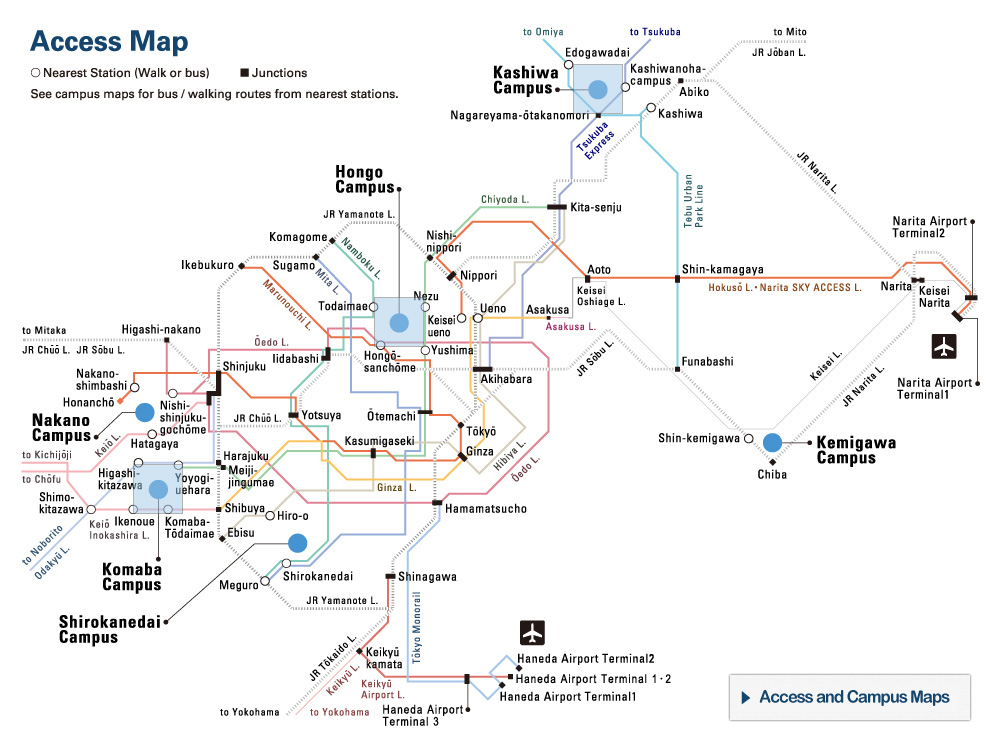
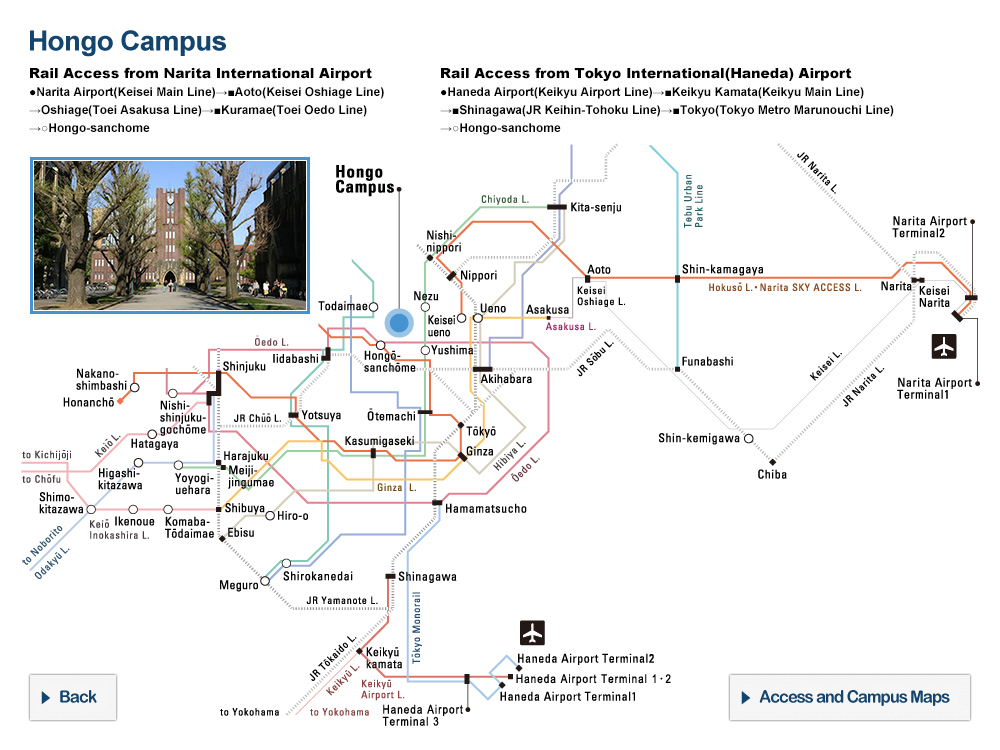
| 8 | Lecture style | In-person (on Hongo Campus) |
| 9 | Evaluation Criteria | Excellent (S) 90–100%; Very good (A) 80–89%; Good (B) 70–79%; Pass (C) 60–69%; Fail (D) 0–59% |
| 10 | Evaluation methods | Attendance and participation: 40% Presentation: 30% Essay: 30% |
| 11 | Prerequisites | A basic background in political science (equivalent to an introductory undergraduate course) is expected. |
| 12 | Contents | Purpose This module introduces students to the key concepts, theories, and issues in the politics of natural resources and environment. Resource-rich states have experienced various political problems, including authoritarianism, civil wars, and international aggression, which have been attributed to the very presence of resource wealth. These issues are collectively called the “resource curse” and have received much scholarly attention since the turn of the century. This course reviews the development of this literature and seeks to go beyond it, discussing how we can connect it to the broader scholarship on resource and environmental politics. It does so by extending the scope of the theory on three grounds: timeframe, issues, and resources. When did the political impact of natural resources begin? What other issues do they lead to? What distinguishes resources with political impacts from those without? The aim of this course is to give students the tools to understand how the geological, geographical, historical, and social settings of a country can affect its politics. It also aims to help them develop the ability to critically analyze contemporary political issues and sometimes think outside the box in explaining their causes. Description The course will consist of eight regular sessions and two guest lectures. Each regular session is divided into a lecture and a discussion. It begins with a lecture by the instructor on the topic of the session (about 30 minutes), followed by a discussion of the assigned readings (the instructor will upload the reading list on LMS (Canvas)). Discussion in each session (after the first one) will be led by student discussion leaders selected in the first session. Students are expected to make one presentation as a discussion leader. Starting in the second class, discussion leaders will be asked to start the discussion through a brief reflection essay (around 2 pages) about the required readings for the week. The essay discusses the readings, answers an initial discussion question set by the course instructor (see the reading list), and formulates a few additional questions related to the readings to be discussed in class. The essay should be analytical and critical; it should not be a mere summary of the readings. Presenters’ questions are meant to provoke debate among class participants. Reflection essays should be emailed in Word or PDF format to all seminar participants (including the course instructor) by 11:59 pm on the day before. Schedule This is a tentative schedule and is subject to change. Session 1: Prehistory – Colonialism and natural resources ・Overview of the course ・The role of natural resources in the expansion of colonial empires Session 2: Democracy ・The relationship between natural resources and democracy ・Oil and other natural resources Session 3: Civil conflict ・The relationship between natural resources and civil conflict ・Oil and other natural resources Session 4: War ・The relationship between natural resources and international war ・Oil and other natural resources Session 5: Guest lecture 1 TBD Session 6: Anti-mining movements ・Causes of anti-mining movements ・Diversity among natural resources Session 7: International environmental issues ・International regulation of resource development ・Limitations to international cooperation Session 8: Domestic environmental issues ・Domestic environmental impact of resource development ・Success and failure of regulation Session 9: Guest lecture 2 TBD Session 10: Human rights ・Conditions of miners ・The role of international mining companies and local governments Assignments Attendance and active participation in class discussions are mandatory (40%). Each student is required to make one presentation as a discussion leader (30%). Based on their reflection essay, they will write the final essay of 1000-1500 words (30%). |
| 13 | Required readings | The reading list will be uploaded to LMS (Canvas). |
| 14 | Reference readings | The reading list will be uploaded to LMS (Canvas). |
| 15 | Notes on Taking the Course | - |
------------------------------
UTokyo Global Unit Courses (GUC)
------------------------------
International Education Promotion Group, Education and Student Support Department
The University of Tokyo, 7-3-1, Hongo, Bunkyo-ku, Tokyo 113-8652 JAPAN
------------------------------
For inquiries regarding GUC:
------------------------------
After carefully reviewing all information on the top page—which may address most of your questions—if you are unable to find relevant information, please direct your inquiries to the following email address:
utokyo-guc.adm(at)gs.mail.u-tokyo.ac.jp
(Please replace “(at)” with “@”.)
*Please note that, in order to ensure fairness to all applicants, the GUC Office does not provide any individual guidance beyond the information available on the website.
UTokyo Global Unit Courses (GUC)
------------------------------
International Education Promotion Group, Education and Student Support Department
The University of Tokyo, 7-3-1, Hongo, Bunkyo-ku, Tokyo 113-8652 JAPAN
------------------------------
For inquiries regarding GUC:
------------------------------
After carefully reviewing all information on the top page—which may address most of your questions—if you are unable to find relevant information, please direct your inquiries to the following email address:
utokyo-guc.adm(at)gs.mail.u-tokyo.ac.jp
(Please replace “(at)” with “@”.)
*Please note that, in order to ensure fairness to all applicants, the GUC Office does not provide any individual guidance beyond the information available on the website.