



About the lecturer
| Gentiane Venture is Professor of Robotics with the Faculty of Engineering and a cross appointed fellow with the National Institute of Advanced Industrial Science & Technology, Japan. Her research focuses on the dynamics of human, robots and the environment. Her group and her work are transdisciplinary to see robotics not as field with applications in certain areas but rather as an art of living together. |  Prof. Gentiane VENTURE Prof. Gentiane VENTURE |
Introduction video
Making Robots Expressive: Design and Control
Syllabus
| 1 | Subject | Making Robots Expressive: Design and Control |
| 2 | Field | Engineering |
| 3 | Key words | Kansei engineering; Robotics; Control Engineering; Affective computing |
| 4 | Global Unit | 1 |
| 5 | Lecturer | Gentiane VENTURE |
| 6 | Period | July 13 - 27, 2026 |
| 7 | Time | 15:00-16:30 (Japan Standard Time) |
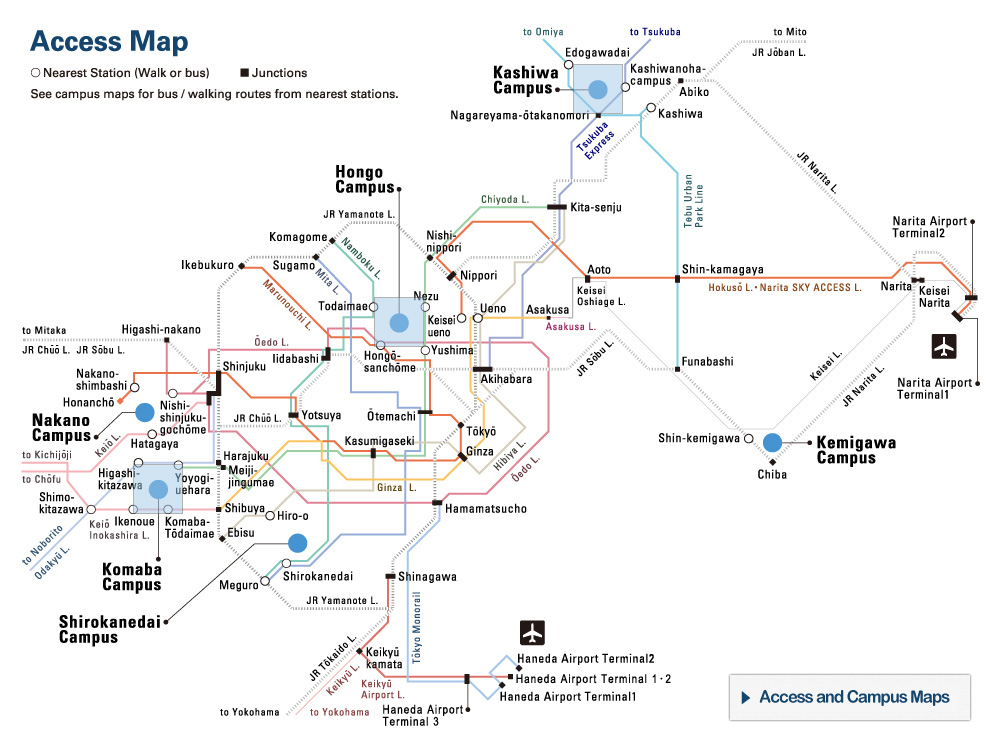
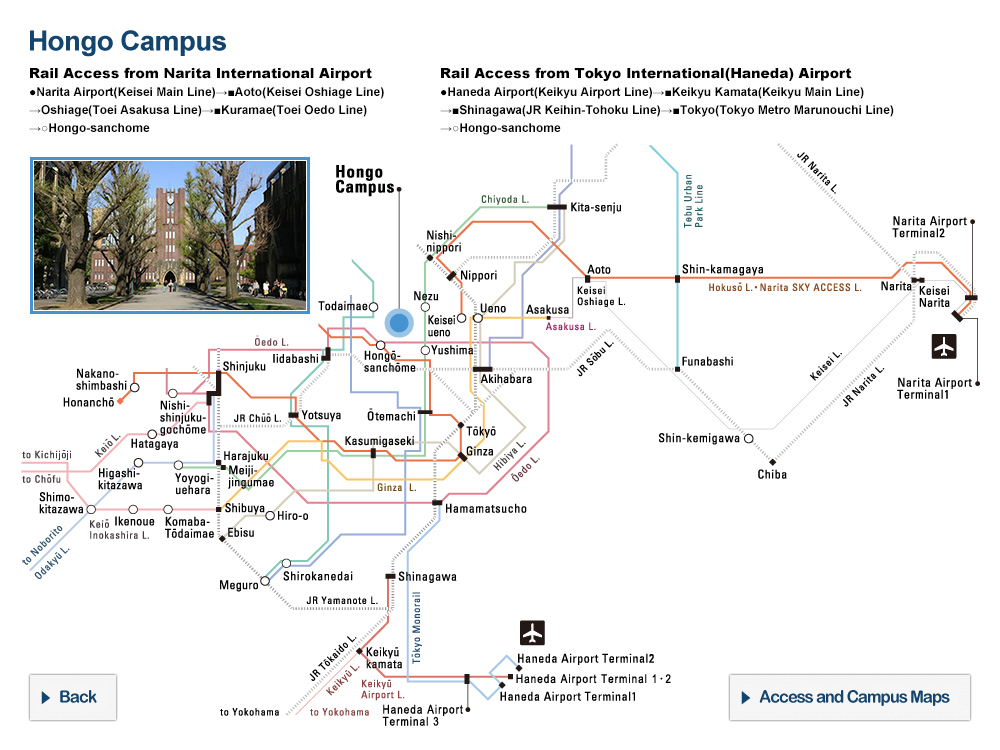
| 8 | Lecture style | In-person (on Hongo Campus) |
| 9 | Evaluation Criteria | Excellent (S) 90–100%; Very good (A) 80–89%; Good (B) 70–79%; Pass (C) 60–69%; Fail (D) 0–59% |
| 10 | Evaluation methods | Attendance /Participation 40% Short assignments 20% Final project 40% |
| 11 | Prerequisites | No specific prerequisite necessary but basic concepts of robotics, control, programming, social psychology are welcome. |
| 12 | Contents | Purpose Students who successfully complete this course will be able to understand the basic concepts behind making robots expressive (design and control), the methods to capture human affects using a variety of sensors and machine learning techniques, and to create ethical experiments involving human subjects in the framework of Human-Robot Interaction. Description In this class students will explore the dynamic intersection of robotics, control, and human interaction. The course delves into the principles and techniques essential for imbuing robots with the ability to convey moods, intentions, and social cues through expressive movements and behaviors. Students will gain a comprehensive understanding of the underlying algorithms and sensor integration required to achieve nuanced robotic expressions. Emphasis will be placed on the interdisciplinary nature of expressive control, incorporating aspects of control theory, artificial intelligence, computer vision, and biomechanics. Through hands-on projects and theoretical discussions, students develop the skills to design robots capable of engaging with humans. This class not only fosters technical proficiency but also encourages a thoughtful consideration of the ethical and societal implications of robotics. Schedule 1 and 2. Expressive movements a. Theories of emotions b. Expressive motions in the performing arts – Laban notation c. Motion capture d. Recognizing expressions in movements 3 and 4. Basic robot controllers a. Null-space control b. Optimal control and inverse optimal control 5 and 6. Using control to generate expressive movements a. Null-space control b. Optimal control 7 and 8. Other means to generate expressive movements a. Variational auto-encoders b. Overview of other methods 9. Evaluation of expressive movements a. Qualitative approaches b. Quantitative approaches c. Conducting experiments 10. Final projects presentations Assignments Students will submit 5 short topical assignments (every two sessions) and a final global project. Assignments will be submitted in various forms depending on the needs of the class: 1-2min videos, presentation material, written documents... |
| 13 | Required readings | - |
| 14 | Reference readings | - |
| 15 | Notes on Taking the Course | - |
------------------------------
UTokyo Global Unit Courses (GUC)
------------------------------
International Education Promotion Group, Education and Student Support Department
The University of Tokyo, 7-3-1, Hongo, Bunkyo-ku, Tokyo 113-8652 JAPAN
------------------------------
For inquiries regarding GUC:
------------------------------
After carefully reviewing all information on the top page—which may address most of your questions—if you are unable to find relevant information, please direct your inquiries to the following email address:
utokyo-guc.adm(at)gs.mail.u-tokyo.ac.jp
(Please replace “(at)” with “@”.)
*Please note that, in order to ensure fairness to all applicants, the GUC Office does not provide any individual guidance beyond the information available on the website.
UTokyo Global Unit Courses (GUC)
------------------------------
International Education Promotion Group, Education and Student Support Department
The University of Tokyo, 7-3-1, Hongo, Bunkyo-ku, Tokyo 113-8652 JAPAN
------------------------------
For inquiries regarding GUC:
------------------------------
After carefully reviewing all information on the top page—which may address most of your questions—if you are unable to find relevant information, please direct your inquiries to the following email address:
utokyo-guc.adm(at)gs.mail.u-tokyo.ac.jp
(Please replace “(at)” with “@”.)
*Please note that, in order to ensure fairness to all applicants, the GUC Office does not provide any individual guidance beyond the information available on the website.