



About the lecturer
| I am based at the Intermediatheque, The University Museum, The University of Tokyo (UMUT). My research interests lie in museology and art studies, with a particular focus on contemporary museum work in Japan. I am especially interested in the role of university museums in connecting art, science, and society. I hold a Ph.D. in Cultural Policy Studies from the National Graduate Institute for Policy Studies, Japan, and have academic training in cultural resources studies and aesthetics at the University of Tokyo. This academic background informs my approach to museums across research and professional practice. Drawing on my experience in exhibition planning and international collaborative projects, I explore how museums respond to social and cultural challenges today. | 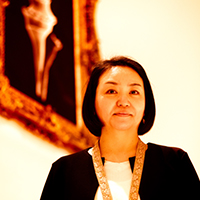
Assoc. Prof. Ayumi TERADA
|
Syllabus
| 1 | Subject | Museums in Contemporary Japan |
| 2 | Field | Museology / Museum Studies |
| 3 | Key words | museology; museum studies; contemporary Japan; university museums; exhibition practice; art and science; cultural institutions; field-based learning |
| 4 | Global Unit | 1 |
| 5 | Lecturer | Ayumi TERADA |
| 6 | Period | July 16 - 24, 2026 |
| 7 | Time | 13:00 - 16:30 [July 16] 13:00 - 18:30 [July 17] 13:00 - 16:30 [July 23] 13:00 - 18:30 [July 24] (Japan Standard Time) |
| 8 | Lecture style | In-person (Field Study) |
| 9 | Evaluation Criteria | Excellent (S) 90–100%; Very good (A) 80–89%; Good (B) 70–79%; Pass (C) 60–69%; Fail (D) 0–59% |
| 10 | Evaluation methods | Attendance/Participation 50%, Final Report 50% |
| 11 | Prerequisites | No prior knowledge of museology or museum studies is required. Students must be able to visit and view museum exhibitions in person. |
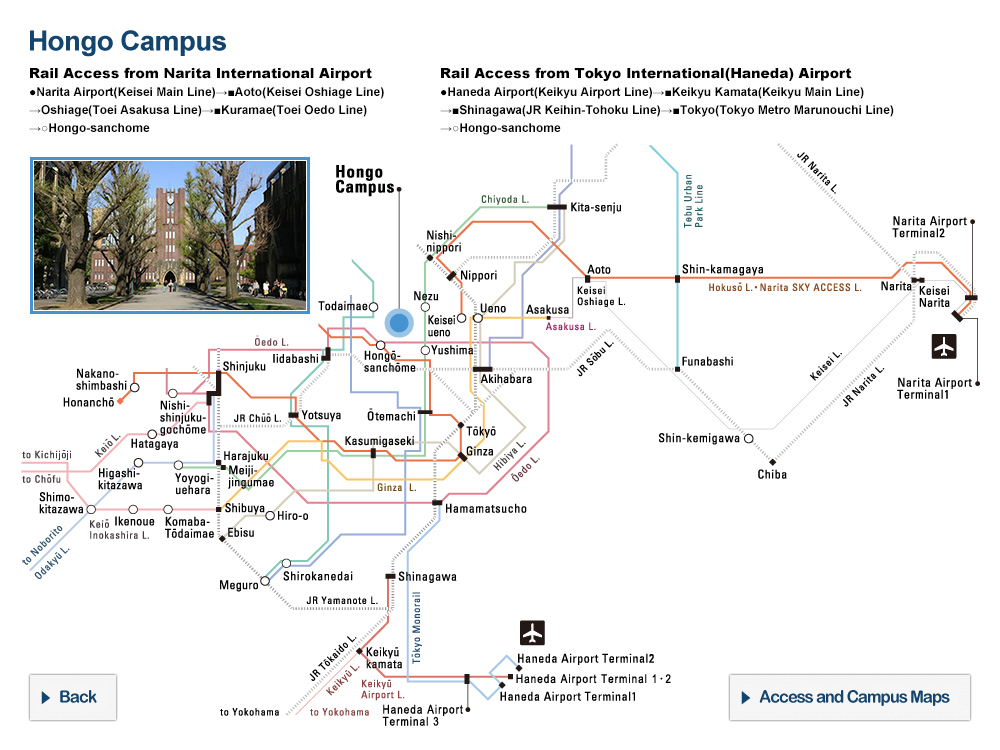
| 12 | Contents | Purpose This course aims to examine contemporary museum work in Japan through field-based learning. By visiting a wide range of museums in Tokyo, students will explore how museums operate as cultural institutions that communicate knowledge, engage with society, and respond to social, scientific, and cultural issues, with special attention given to university museums at the University of Tokyo and their roles in connecting art, science, and society through education and research. Students who successfully complete this course will be able to observe and analyze museum exhibitions from multiple perspectives, including curatorial intent, spatial design, interpretation, and institutional context, and will develop the ability to critically reflect on museums as dynamic spaces shaped by historical backgrounds and contemporary concerns. Through comparison and reflection based on field visits, students will also strengthen their ability to articulate and organize their observations and engage with museums not only as visitors, but as critical thinkers capable of forming their own perspectives on museums in contemporary Japan. Description Rather than relying primarily on classroom lectures, this course adopts a field-based, in-person approach to learning. The course is conducted over four days, with sessions organized into grouped site visits (Sessions 1–2, 3–5, 6–7, and 8–10). Each day focuses on museums in a specific area of Tokyo, including the Marunouchi, Ueno, Hongo/Koishikawa, and Roppongi areas. Through these visits, students will observe exhibitions, architectural spaces, interpretive strategies, and institutional contexts across a variety of museum settings. At the beginning of each day, the instructor will offer a short introductory lecture at the meeting place to outline key themes, historical backgrounds, and perspectives relevant to that day’s museum visits. Students are then encouraged to engage actively with exhibitions, paying attention to how museums communicate ideas, organize knowledge, and address social, scientific, and cultural issues. Group movement and shared viewing experiences are integral to the course structure, allowing students to compare impressions and perspectives informally during visits. While the course does not include formal group work or presentations, exchange among students is encouraged during and after visits in order to support comparative thinking and peer learning. The course emphasizes careful observation, comparison across different museums, and reflection as core learning methods. Through repeated field visits and reflective assignments, students will analyze museums as dynamic cultural institutions shaped by historical circumstances, curatorial decisions, and contemporary social concerns. By combining field-based learning with brief lectures and structured reflection, the course aims to deepen students’ understanding of museums in contemporary Japan and to foster analytical and reflective ways of engaging with museums beyond the role of passive visitors. Schedule 1–2. Introduction and field trips to museums in the Marunouchi area (including the Intermediatheque) 3–5. Field trips to museums in the Ueno area 6–7. Field trips to museums in the Hongo / Koishikawa area 8–10. Field trips to museums in the Roppongi area Assignments (1) Visiting Notes for each museum visit (These notes serve as a record of participation and substitute for attendance.): Students submit short visiting notes of approximately 100 words per museum for all ten sessions, focusing on key observations and reflections. (2) Final Report: A reflective and analytical essay based on the museum visits conducted during the course; length: approximately 1,000–1,200 words. |
| 13 | Required readings | None in particular |
| 14 | Reference readings | None in particular |
| 15 | Notes on Taking the Course | Students are responsible for their own transportation costs and any admission fees required for museum visits. |
------------------------------
UTokyo Global Unit Courses (GUC)
------------------------------
International Education Promotion Group, Education and Student Support Department
The University of Tokyo, 7-3-1, Hongo, Bunkyo-ku, Tokyo 113-8652 JAPAN
------------------------------
For inquiries regarding GUC:
------------------------------
After carefully reviewing all information on the top page—which may address most of your questions—if you are unable to find relevant information, please direct your inquiries to the following email address:
utokyo-guc.adm(at)gs.mail.u-tokyo.ac.jp
(Please replace “(at)” with “@”.)
*Please note that, in order to ensure fairness to all applicants, the GUC Office does not provide any individual guidance beyond the information available on the website.
UTokyo Global Unit Courses (GUC)
------------------------------
International Education Promotion Group, Education and Student Support Department
The University of Tokyo, 7-3-1, Hongo, Bunkyo-ku, Tokyo 113-8652 JAPAN
------------------------------
For inquiries regarding GUC:
------------------------------
After carefully reviewing all information on the top page—which may address most of your questions—if you are unable to find relevant information, please direct your inquiries to the following email address:
utokyo-guc.adm(at)gs.mail.u-tokyo.ac.jp
(Please replace “(at)” with “@”.)
*Please note that, in order to ensure fairness to all applicants, the GUC Office does not provide any individual guidance beyond the information available on the website.