

 書籍検索
書籍検索


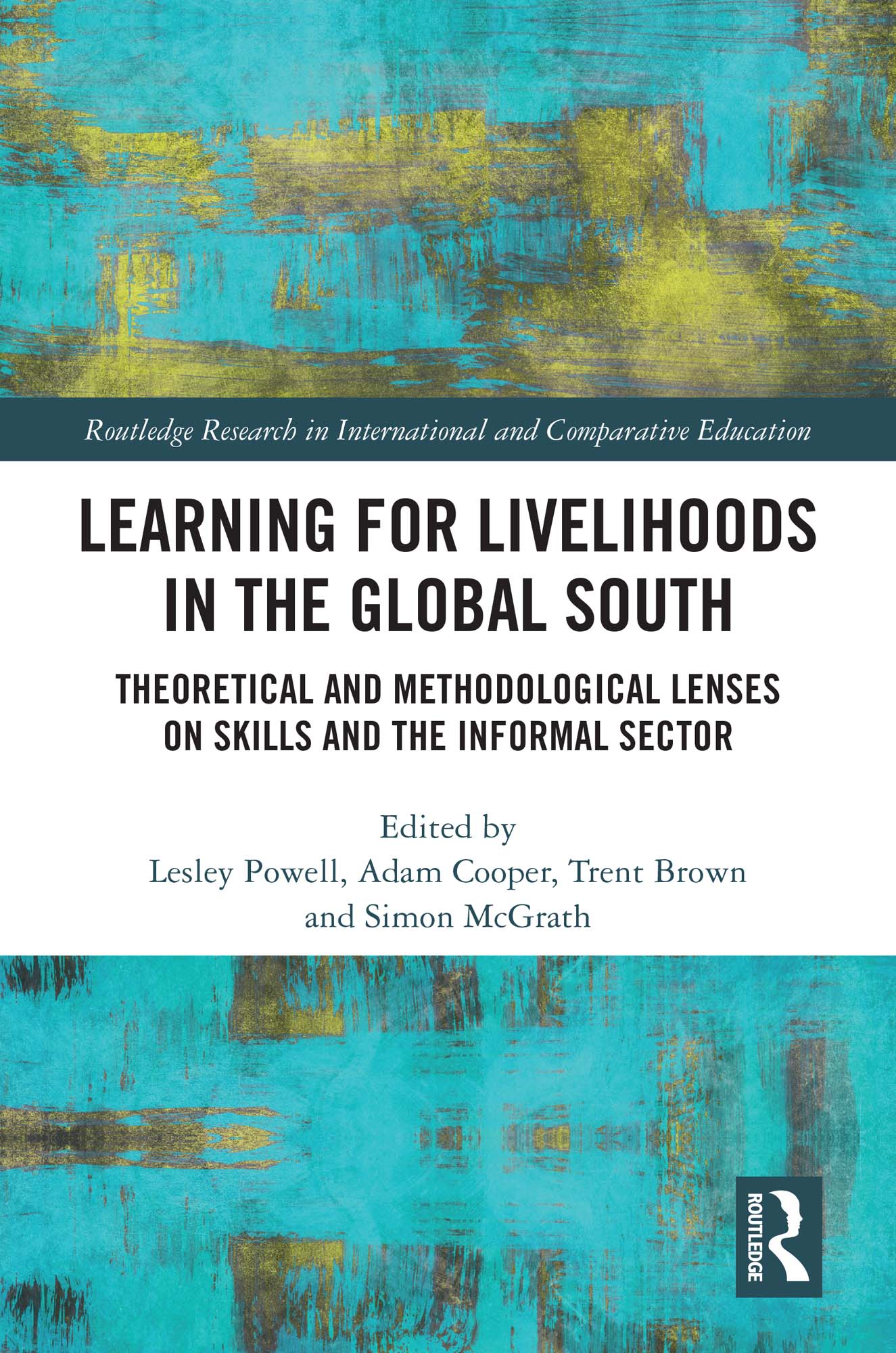
レスリー・パウエル、アダム・クーパー、サイモン・マグラスと私が共に編纂した本書では、学習理論や教育実践、政策立案、研究アプローチには「形式性バイアス」があると主張します。すなわち、賃金労働や政府規制下のフォーマルな経済部門を前提とした学習を主な焦点としているということです。しかし、現実には世界の労働者の大多数、特にグローバル・サウスの人びとはインフォーマル部門に生計を依存しています。
本書の各章は、インフォーマル部門の生計のための学びを新たに理論化・概念化する試みであり、既存の理論・政策・研究分野への批判的検討も行います。教育や技能を単なる利益追求や生産性向上の手段として捉えるのではなく、新自由主義的・人的資本理論に基づく教育の枠組みを超えた新しい視点を提示しています。
事例研究はインド、南アフリカ、西アフリカ、コロンビアにわたり、教育がいかに人びとをエンパワーし、生計を強化し、主体性・技能・自己成長・発言能力を拡大し得るかに焦点を当てています。
(紹介文執筆者: 東京カレッジ 准教授 トレント・ブラウン / 2025)
本の目次
Foreword
Professor Leon Tikly
List of editors and contributors
Acknowledgements
1. Youth, skills, and informal sectors in the Global South: theoretical and methodological lenses on learning and livelihoods
Adam Cooper, Trent Brown, Lesley Powell and Simon McGrath
PART 1. Theorising: rethinking the purpose of education and training
2. A relational capabilitarian approach for wellbeing livelihoods: reframing and making alternative education, skills, and work for young people
Joan Dejaeghere
3. Subsumption, alienation, and questions of meaning in informal sector skills training
Trent Brown
4. Supporting youth livelihoods in an informal “sub‑ield” in the Global South
Adam Cooper
PART 2. Conceptualising: conceptual tools for understanding informal sector skill acquisition in practice
5. Shifting informal geographies and the hustle for a better future
David Monk and George Ladaah Openjuru
6. A typology of informal sector workers – heterogeneity and the complexity of skills development responses
Lesley Powell and Simon McGrath
7. The potential role of ICT in facilitating learning for livelihoods among informal apprentices in the automotive trade in Ghana
Joyceline Alla-Mensah and Eric Addae-Kyeremeh
8. Highly educated migrants in platform‑mediated food delivery work in the Netherlands: the absent presence of skills and its social effects
Roy Huijsmans
PART 3. Critiquing: understanding constraints and weaknesses in dominant appro
9. Exploring ‘valuable’ knowledge, skills, and attitudes: perceptions of young people in an informal settlement in Pietermaritzburg
Thandi Gumbi and Anne Harley
10. Critiquing the concept of ‘self‑reliance’ in informal sector training: a case study of Afghan refugee women in India
Namita Sharma and Preeti Dagar
11. Gendering decent work: rethinking the connections between informality, TVET, and gender through the ‘Decent Work’ agenda in Sierra Leone and Cameroon
Ross Wignall, Brigitte Piquard and Emily Joel
PART 4. Advocating: towards reform of policy and practice
12. Financing skills and lifelong learning in the informal sector
Robert Palmer
13. Exploring the intersectionality of green skills, innovation, and livelihoods in the informal economy in Harare, Zimbabwe
Tarisai Kudakwashe Manyati, Billy Kalima, Morgen Mutsau and Temitope J. Owolabi
14. Recognising Colombian waste pickers as public service providers and producers of knowledge
Federico Parra
PART 5. Concluding: moving forward
15. Skill and livelihoods: some concluding ideas
Simon McGrath
Professor Leon Tikly
List of editors and contributors
Acknowledgements
1. Youth, skills, and informal sectors in the Global South: theoretical and methodological lenses on learning and livelihoods
Adam Cooper, Trent Brown, Lesley Powell and Simon McGrath
PART 1. Theorising: rethinking the purpose of education and training
2. A relational capabilitarian approach for wellbeing livelihoods: reframing and making alternative education, skills, and work for young people
Joan Dejaeghere
3. Subsumption, alienation, and questions of meaning in informal sector skills training
Trent Brown
4. Supporting youth livelihoods in an informal “sub‑ield” in the Global South
Adam Cooper
PART 2. Conceptualising: conceptual tools for understanding informal sector skill acquisition in practice
5. Shifting informal geographies and the hustle for a better future
David Monk and George Ladaah Openjuru
6. A typology of informal sector workers – heterogeneity and the complexity of skills development responses
Lesley Powell and Simon McGrath
7. The potential role of ICT in facilitating learning for livelihoods among informal apprentices in the automotive trade in Ghana
Joyceline Alla-Mensah and Eric Addae-Kyeremeh
8. Highly educated migrants in platform‑mediated food delivery work in the Netherlands: the absent presence of skills and its social effects
Roy Huijsmans
PART 3. Critiquing: understanding constraints and weaknesses in dominant appro
9. Exploring ‘valuable’ knowledge, skills, and attitudes: perceptions of young people in an informal settlement in Pietermaritzburg
Thandi Gumbi and Anne Harley
10. Critiquing the concept of ‘self‑reliance’ in informal sector training: a case study of Afghan refugee women in India
Namita Sharma and Preeti Dagar
11. Gendering decent work: rethinking the connections between informality, TVET, and gender through the ‘Decent Work’ agenda in Sierra Leone and Cameroon
Ross Wignall, Brigitte Piquard and Emily Joel
PART 4. Advocating: towards reform of policy and practice
12. Financing skills and lifelong learning in the informal sector
Robert Palmer
13. Exploring the intersectionality of green skills, innovation, and livelihoods in the informal economy in Harare, Zimbabwe
Tarisai Kudakwashe Manyati, Billy Kalima, Morgen Mutsau and Temitope J. Owolabi
14. Recognising Colombian waste pickers as public service providers and producers of knowledge
Federico Parra
PART 5. Concluding: moving forward
15. Skill and livelihoods: some concluding ideas
Simon McGrath
関連情報
‘Learning for informal sector livelihoods is highly relevant worldwide; yet, we know little about the topic from a scientific perspective. This book makes major contributions to closing this research gap. It is a “must read” for scholars and practitioners focused on skill acquisition in the Global South.’
Matthias Pilz, Faculty of Management, Economics and Social Sciences, University of Cologne, Germany
セミナー:
南アジア研究センター・セミナー:Dr. Trent Brown, ‘Skill India in the Countryside: Expectations, Disappointments, and Possibilities’ (東京大学南アジア研究センター/環インド洋地域研究プロジェクト (TINDOWS)、東京外国語大学南アジア研究センター 2023年5月19日)
https://www.gsi.c.u-tokyo.ac.jp/event/5336/