

 Find a book


Title
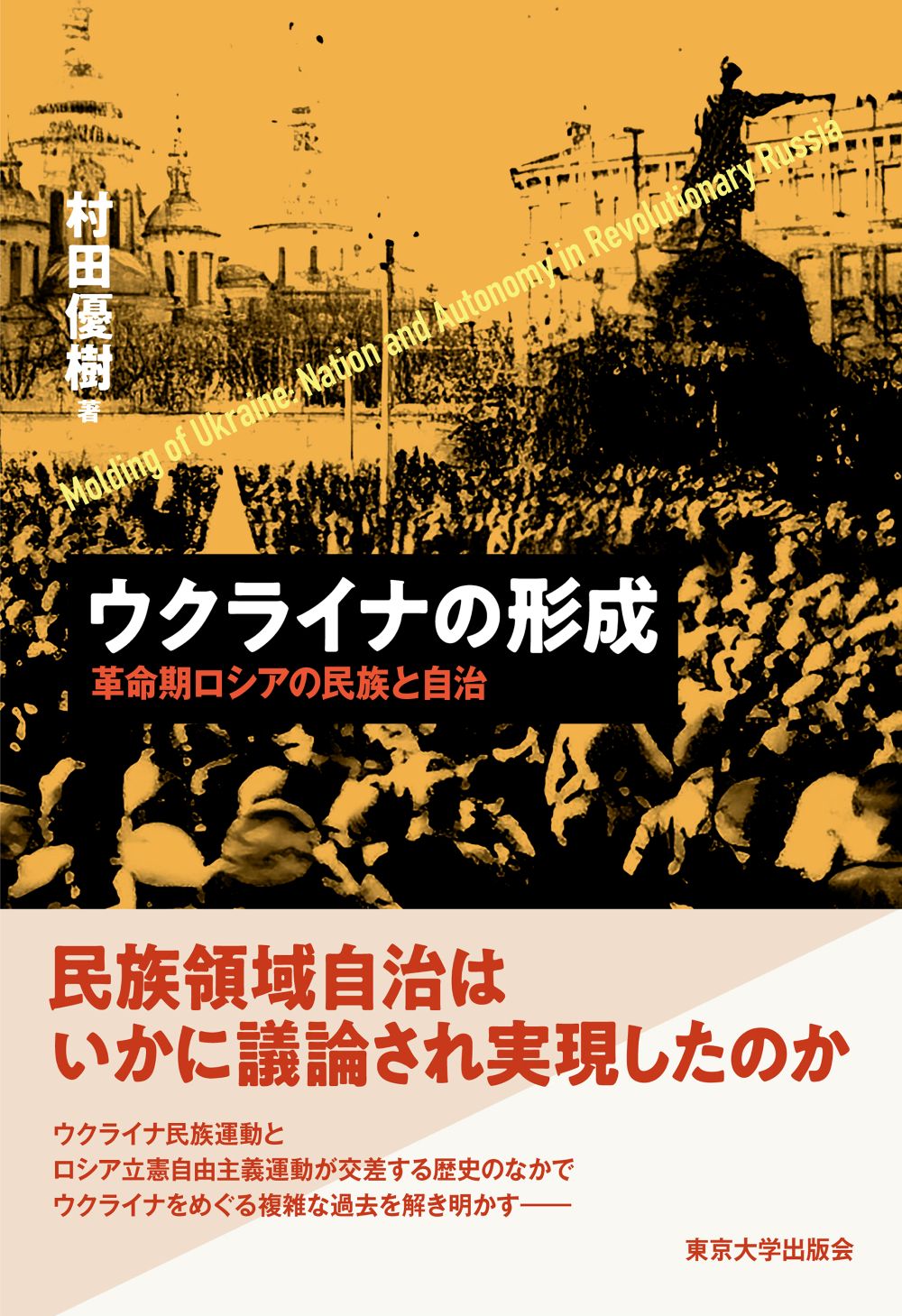
Ukraine no Keisei (Molding of Ukraine - Nation and Autonomy in Revolutionary Russia)
Size
328 pages, 127x188mm
Language
Japanese
Released
October 02, 2025
ISBN
978-4-13-021088-1
Published by
University of Tokyo Press
Book Info
See Book Availability at Library
Japanese Page
 eBook
eBook
This book is a historical study that addresses the question of how a Ukrainian nation-state was formed by drawing on primary sources from the early 20th century—the era when a political entity named "Ukraine" first emerged.
In historical research, the core task is to synthesize "what is already known" and present "newly discovered insights." This book acknowledges the intrinsic developments within Ukraine, such as the birth and growth of nationalism in 19th-century Ukraine under Russian imperial rule, and the "Ukrainian Revolution" spanning from the establishment of a Ukrainian state during the Russian Revolution through the "War of Independence" to its eventual dissolution, as discussed in previous scholarship. Building on this foundation, this book offers a new perspective on the significance of the interactions between the Ukrainian national movement and the liberal movement in Russia. Centering on the concept of "national-territorial autonomy,” that is, political autonomy in Ukrainian-inhabited regions without dismantling the Russian state, this study demonstrates that not only Ukrainian intellectuals but also Russian intellectuals were actively involved in the formation, debate, and practical implementation of this idea. The political entity known as "Ukraine" did not emerge through a process of unilateral centrifugal secession from Russia; rather, it was born from the intersection of Ukrainian and Russian intellectuals against the backdrop of the political upheavals of World War I and the Russian Revolution.
In historical research, empirical evidence from historical sources is indispensable for claiming that something has been "newly discovered." This book analyzes relevant materials from Ukrainian nationalists and Russian liberals, and for the period following the 1917 Revolution, from Ukrainian and Russian governments (for details, please refer to the Introduction and Bibliography of this book). While historians tend to prioritize unpublished materials accessible only in archives (which is a view I also generally share), I believe that the strength of this book lies in its analysis of published primary sources, such as contemporary newspapers and journals. I would like to mention some specific sources for which I have a particular affinity.
1. Rada: The daily newspaper of the mainstream Ukrainian movement within the Russian Empire boasted the largest circulation among the Ukrainian newspapers. Reading through newspapers is a time-consuming task, but fortunately, Rada has been digitized. By spending countless hours in the university computer lab reading every corner of this daily from 1905 to 1907 period, I became convinced of the deep ties between the Ukrainian movement and Russian liberalism.
2. Ukrainskaia Zhizn’ (Ukrainian Life): A Russian-language magazine published in Moscow during the late imperial era. While its stated goal was to inform the Russian public about the "Ukrainian question," it functioned in practice as a forum for interaction between Ukrainian and Russian intellectuals.
3. Ukrainische Nachrichten (Ukrainian News): The official organ of the Union for the Liberation of Ukraine, an organization founded by exiles from the Russian Empire during World War I; it was published in German. From its pages, one can clearly see how the upheaval of the imperial order caused by the Great War suddenly made the political goal of establishing an independent Ukrainian state appear realistic, and how the Union's leaders struggled to align that goal with the interests of Germany and Austria-Hungary.
Among the many books on Ukraine and its history published in Japan in large numbers since 2022, there are actually relatively few written as specialized academic studies. It is my hope that through this book, readers will gain an appreciation for the complex process by which a nation-state is conceived and ultimately emerges.
(Written by MURATA Yuki, Associate Professor, Graduate Schools for Law and Politics / 2026)