

 Find a book


Title
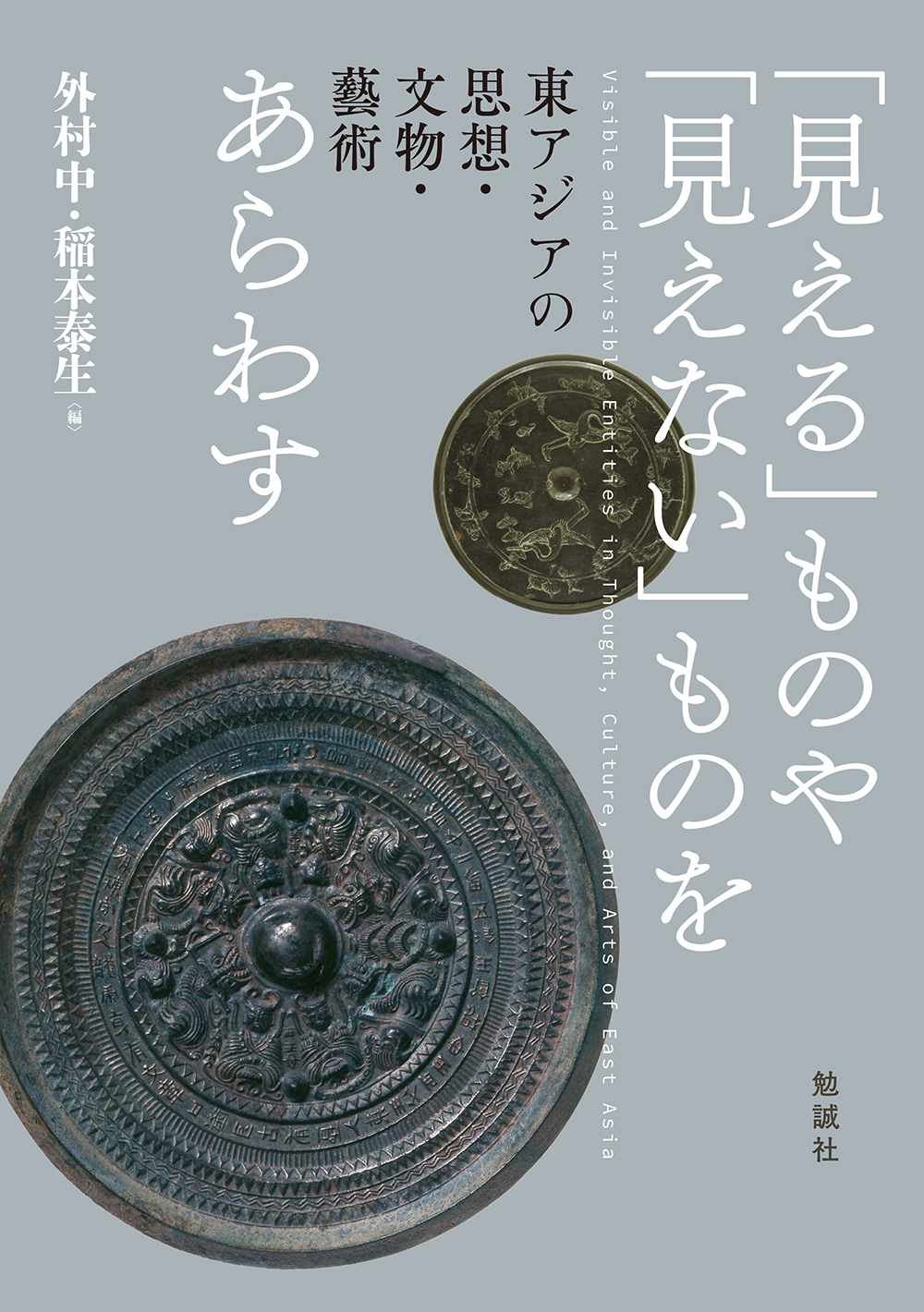
Mieru-mono ya Mienai-mono wo arawasu (Visible and Invisible Entities in Thought, Culture, and Arts of East Asia)
Size
746 pages, B5 format, hardcover
Language
Japanese
Released
March, 2024
ISBN
978-4-585-37012-3
Published by
Benseisha Publishing Inc.
Book Info
See Book Availability at Library
Japanese Page
This book contains 25 essays based on presentations by scholars from a workshop held at the Institute for Research in Humanities, Kyoto University. The workshop was organized by Professor Ataru Sotomura of the University of Würzburg. The lecture series had a common theme – the interaction between the “visible” and “nonvisible” in each field of study. The fields were Chinese philosophy, Buddhist studies, archaeology, art history, cultural studies and theatrical studies.
The theme which is fundamental to art history – the interaction between the visible and nonvisible – provides important perspectives to how we look at art. In the art historical field, we discuss this issue from the perspective of how to make visible, that which is not visible. This discussion also extends to what cannot be visualized or given form as art. These are important viewpoints when considering the art works that we can see and how we contemplate them. Nonvisible images, can be words, sounds and images that exist only in our souls, minds and brains. Painters and sculptors must choose how they are to create visual images from the nonvisible with their materials, such as with pigments and their brush, or with stone, bronze, and clay. They must also consider what might get lost in this visualization process, for example when comparing words with images. We therefore must also think about the differences in the presentations of the imagery by each painter or sculptor. This interaction between the visible and nonvisible also depends upon the viewer, since what one person might see in the images of a painting may differ from another person’s reception of a work. Considering such issues when studying art history should bring us the joys of appreciating the artwork itself.
Reading this book will make readers think about the many types of thinking on the connections between the visible and nonvisible in history, literature, theatrical arts, religion and in the visual arts. This book will give you a new perspective on what we can see as visible in this world.
(Written by MASUKI Ryusuke, Professor, Graduate School of Humanities and Sociology / 2026)