


 Find a book


Title
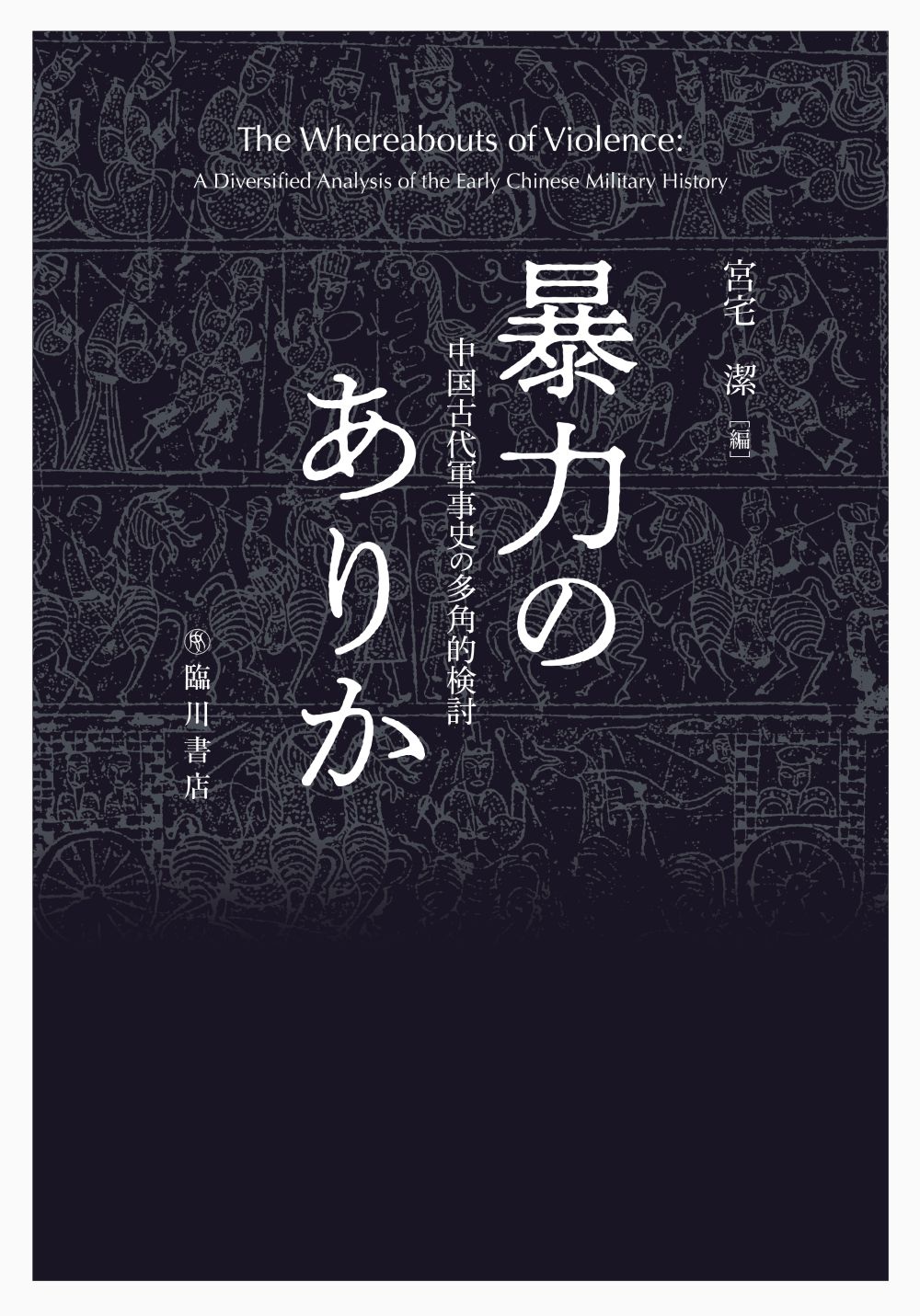
Bouryoku no Arika (The Whereabouts of Violence - A Diversified Analysis of the Early Chinese Military History)
Size
440 pages, A5 format, hardcover
Language
Japanese
Released
April, 2024
ISBN
978-4-653-04567-0
Published by
Rinsen Book Co.
Book Info
See Book Availability at Library
Japanese Page
Currently, we are witnessing several international military conflicts. Russia has continued its military invasion of Ukraine. The United States detained the former president of Venezuela and launched joint military strikes against Iran. In addition, China's position on the Taiwanese issue has drawn considerable attention, as it indicates that it may resort to military force if necessary.
The UN Charter requires member states to peacefully settle international disputes. It also stipulates that all members should refrain from threatening or using force against the territorial integrity or political independence of any state. However, 81 years after its founding, the United Nations was unable to prevent military conflicts. Permanent members of the Security Council are no exceptions.
Naturally, each party argued that the use of military force was both unavoidable and limited. Force is fundamentally a form of violence. What one side regards as military force is experienced as violence by those against whom it is used. In this sense, there is no essential difference between the two. This perspective may help explain why both the UN Charter and the Constitution of Japan have a negative view of the use of military force. This volume adopts the same perspective by analyzing the military in early China through the lens of violence.
In early China, however, the original concept of baoli 暴力 ("violence") carried a meaning quite different from that of military force. The Zhouli 周礼 (Rites of Zhou), a Confucian classic, records an official position known as Jinbaoshi 禁暴氏 ("Prohibitor of Violence"). One of the responsibilities of this official was to punish acts of luanbao lizheng 乱暴力正 committed by commoners. This refers to the distortion of justice through acts that violate moral norms. The power used to punish such behavior was called xing 刑 ("punishment"), and bing 兵 ("military force") was regarded as an extension of this punitive authority. For example, the "Treatise on Punishments and Law" (Xingfa zhi 刑法志) in the Hanshu 漢書 (Book of Han) states that "major punishments employ armored troops." In other words, military force (bing) was used to punish serious acts of violence such as foreign invasions or attempts to overthrow the government. According to this way of thinking, violence was a force that disrupted the social order, whereas military force served to suppress or correct such violence. Thus, there is no basis for equating military forces to violence.
However, this view reflects the Legalist traditions. Ancient China also produced philosophical traditions holding that military force should be restrained regardless of the circumstances. The Shiji (史記 Records of the Grand Historian) repeatedly cites the saying, "Weapons are instruments of ill omen." Boyi and Shuqi, whose biographies appear at the beginning of the Shiji, chose to starve themselves to death in protest against King Wu 武 of Zhou's armed revolution. Reflecting on their tragic fate, Sima Qian 司馬遷 asked, "Is the Way of Heaven just or unjust?"
By treating the military as a form of violence, this volume examines the early Chinese military history from multiple perspectives. This approach raises several historical questions: How did early China justify war and military forces? How did they attempt to regulate them? What impacts did conquests and occupations have on society? How was the military related to state formation and the development of royal authority?
The editor of this volume is Professor MIYAKE Kiyoshi of Kyoto University, a leading scholar of Qin and Han’s legal history. The volume contains essays by 11 scholars from universities in Japan, South Korea, China, and the United States, all of whom have collaborated with Professor Miyake for many years in studying the military in early China. I am one of the main contributors to this volume. My chapter examines changing views of warfare in the Shangjunshu (商君書 The Book of Lord Shang), a text traditionally attributed to Shang Yang but in fact expanded and edited by later generations. Shang Yang is generally regarded as the architect of Qin's policy of fuguo qiangbing (富国強兵 "enriching the state and strengthening the military"), which transformed Qin into a powerful expansionist state. However, I argue that Shang Yang's original conception of this policy was primarily intended for territorial defense.
Readers are encouraged to explore the remaining chapters by reviewing the volume. Although this is a specialized academic work, each chapter has been written in a style that is as accessible as possible, reflecting Professor Miyake's wish for the book to reach a broad readership.
(Written by SAGAWA Eiji, Professor, Graduate School of Humanities and Sociology / 2026)
Table of Contents
Part I: Eyes on Violence
Chapter 1: Violence in Early Imperial Chinese History (Japanese translated version) (SANFT, Charles)
Chapter 2: Early Chinese Just War Theory and War Narratives in the Shiji 史記: On The Criteria for the Justification of Violence (KIM Byung-Joon)
Chapter 3: Poetries of Imperial Hunting and Military Rituals in the Former and Latter Han Dynasties: A Fragmentary Passage Depicting the Ritualization of Violence (SATŌ Tatsurō)
Chapter 4: Buddhism and the Military in the Wei, Jin, Southern and Northern Dynasties: A Study on the Biographies of Monks (KOGACHI Ryūichi)
Column: The Outbreak of Rebellions and the Sources of Their Violence in the Tang Dynasty: Rethinking the An Lushan 安禄山 Rebellion (MORIBE Yutaka)
Part II: Between Wartime and Peacetime
Chapter 5: Development of the Military Service Registration System from Qin to the Beginning of the Former Han: An Analysis Based on Newly Recovered Bamboo Strips (CHEN Wei)
Chapter 6: The Withdrawal of the Qin Conquering Army: The Development of Occupational Administration as Seen from the Liye 里耶 Qin Strips (MIYAKE Kiyoshi)
Chapter 7: From a Wartime Regime to Peacetime Administration: A Study of County-level Officials and Their Role in the Maintenance of Public Order during the Qin and Han Dynasties (SUN Wenbo)
Chapter 8: The Background for the Appearance of Jiedushi 節度使 in the Tang Dynasty: With Attention to the Changes in the Situation Surrounding External Wars (LEE Kichon)
Part III: The Magnetic Forces of Warfare
Chapter 9: Warfare and Royal Authority: Qiangguo (to strengthen the country) and Tianxia (all under heaven) in Shangjunshu (The Book of Lord Shang) and the System of Military Ranks (SAGAWA Eiji)
Chapter 10: Warfare and Coinage: The Interrelationship Between Qin Dynasty Administration of Newly Occupied Territories and the Circulation of Banliang 半両 Coins (MIYAKE Kiyoshi)
Chapter 11: Military Administration and Penalties: A Preliminary Study of the Contempt for the Military in the Qin and Han Dynasties (TAKATORI Yūji)
Afterword
Index


