

 Find a book


Title
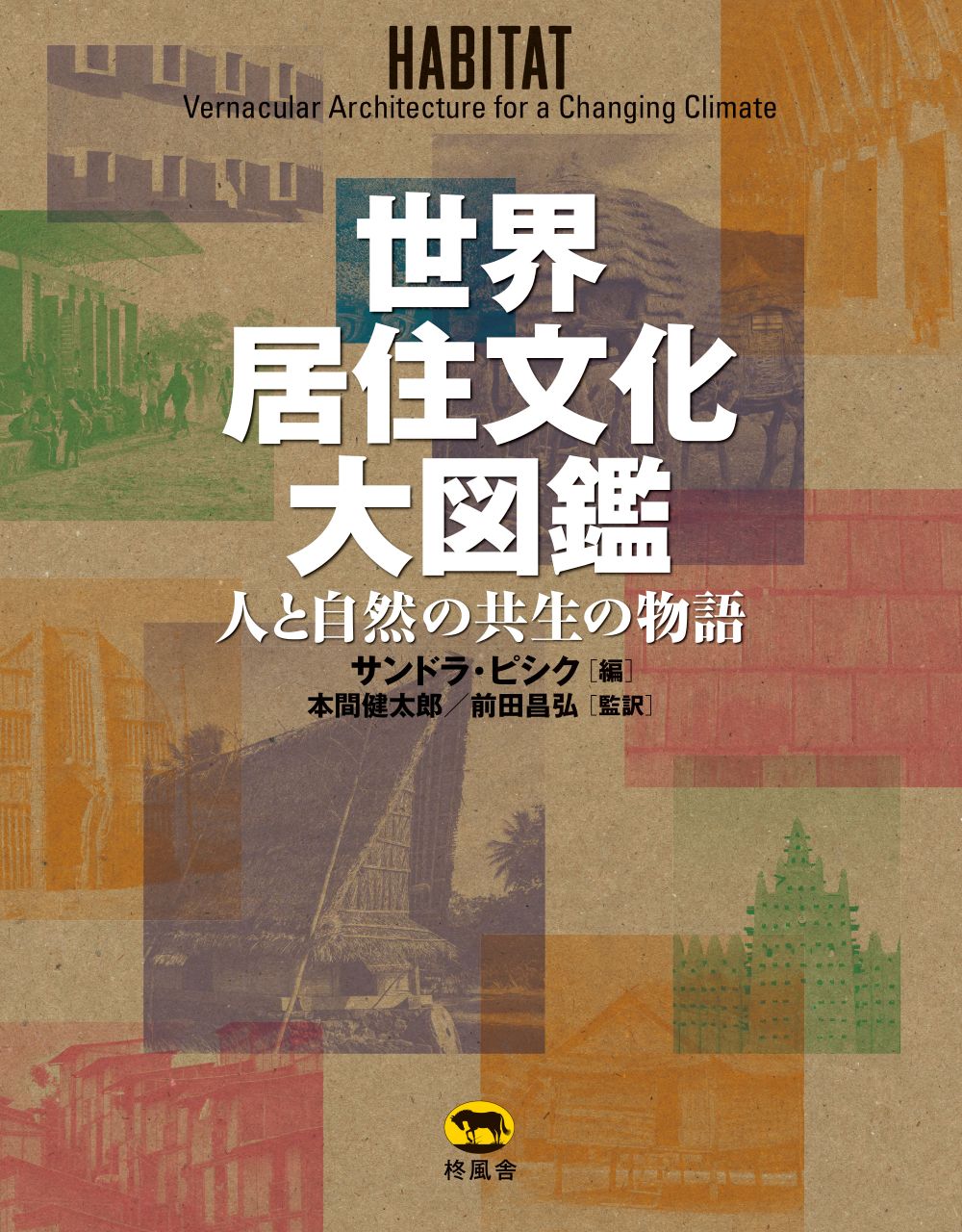
Sekai Kyojubunka Daizukan (Habitat: Vernacular Architecture for a Changing Climate)
Size
496 pages, B4 format, full colors
Language
Japanese
Released
April 11, 2023
ISBN
978-4-86498-101-9
Published by
Shufusha
Book Info
See Book Availability at Library
Japanese Page
The pointed hat-like thatched roofs on Sumba Island in Indonesia; the portable ger of nomads on the Mongolian steppe; the mud houses built by the Gurunsi people in Burkina Faso—across the world, people have created dwellings deeply attuned to their natural and cultural environments. This book is a richly illustrated atlas that presents such vernacular architecture.
Vernacular architecture may be described as “architecture without architects”: buildings shaped by climate, landscape, and everyday life. It is the crystallization of wisdom developed over centuries through limited resources and constant negotiation with nature. This volume does not treat these dwellings as merely nostalgic or exotic, but as lessons for how communities might endure and adapt in the future.
The chapters are organized according to Köppen’s climate classification—tropical, dry, temperate, continental, and polar. Similar climates often provide similar materials and challenges, producing comparable architectural solutions. In tropical forests, grass and bamboo are woven into breezy houses; in dry deserts, thick walls of mud or stone buffer the temperature extremes of day and night. Because these climate zones stretch along latitudinal lines—from Eurasia to Africa, the Americas, and Australia—similar dwellings appear in distant regions. The book’s chapter structure brings them together as if long-separated twins were reunited.
At the same time, the book suggests that climate alone cannot explain the diversity of human shelter. Responses are strikingly varied. In multiethnic regions especially, very different architectural styles often stand side by side, reflecting histories of exchange and conflict. This interplay of similarity and difference is one of the book’s great appeals.
This is the complete Japanese translation of Habitat: Vernacular Architecture for a Changing Climate, edited by Sandra Piesik and authored by experts worldwide. The chief translators are Kentaro Honma and Masahiro Maeda, with Hirohide Kobayashi, Ikuro Shimizu, and Satoshi Nasu serving on the editorial board. 37 translators in total, including the five named above, contributed. In the course of translation, we found that many terms for materials or architectural components differed across regions yet often referred to the same thing. To unify usage, we compiled an English–Japanese glossary that eventually grew to more than 3,500 entries. The process made us keenly aware of both the unity and the diversity embedded in vernacular traditions.
Today, traditional dwelling cultures are rapidly disappearing under urbanization, development, and climate change. Yet this book points not only to what is being lost, but also to new possibilities. It highlights examples of modern vernacular architecture—projects that revive traditional forms with modern technology, that combine local materials and skills with new aesthetics, or that reuse regional waste in construction. In the Anthropocene, marked by climate crisis and resource depletion, these examples offer valuable insights for living sustainably with nature. By turning its pages, readers can journey through the world’s dwellings and glimpse possibilities for homes that lead into the future.
(Written by HONMA Kentaro, Associate Professor, Institute of Industrial Science / 2025)
Table of Contents
The Influence of Climate on Building Design and Materials
Koppen-Geiger Map
A Geological Classification of Earth Materials in Vernacular Construction
Plants in the Built Environment
An Anthropological Introduction to Vernacular Architecture
The Value of the Vernacular
Tropical
Abundance and Diversity in Tropical Regions
Chattel Houses and Timber Architecture of the Caribbean
Creole, Carbet, Caboclo and Brasileiro-Caribbean Houses of French Guiana and Brazil
Indigenous and Colonial Structures in Venezuela
Traditional Waorani Houses of the Ecuadorian Amazon
Upper Xingu and Wajapi Vernacular of Brazil
Yanomami Vernacular of the Brazilian Amazon
Indigenous Malocas of Amazonia
Favelas of Brazil’s Urban Periphery
Guarani ‘Big Houses’ of Paraguay
Vernacular and Colonial Structures of Sierra Leone, Liberia, Guinea and Guinea Bissau
Gurensi Mud-based Vernacular of Burkina Faso and Ghana
Vernacular Settlements of Cote d’Ivoire, Ghana, Togo, Benin and Cameroon
Hausa, Yoruba and Igbo Vernacular of Nigeria
Sooro Residences of Northern Cameroon
Beehive-style and Palmtimber Dwellings of the Democratic Republic of Congo and South Sudan
Beehive Structures of Rwanda, Burundi, South Sudan and Kenya
Wooden Palaces of Madagascar
Kachha, Pukka and Semi-pukka Houses of India
Vernacular and Colonial Structures in Sri Lanka
Vernacular Traditions of Bangladesh
Traditional Farm Dwellings of Myanmar
Southeast Asian Adaptation to Migration, Mobility and Monsoons
Bamboo Stilt Houses of Laos
Regional Adaptations of Thailand’s Vernacular
Thatch, Wood, Keng and Khmer Houses of Cambodia
Vietnam’s Regional Eclectic Vernacular
Multicultural Identities of Malay Vernacular
Vernacular and Colonial Structures of Singapore
Rainforest Longhouses of Brunei Darussalam
Kubo and Bale? Homes of the Philippines
Rumah Adat and Marapu of Indonesia’s Sumbanese Vernacular
Aboriginal Structures of Tropical Australia
Longhouses and Korowai Treehouses of New Guinea
Micronesia’s Bai, Ulitao, Pebaye, Katelu and Stone Constructions
Navala and Lau Bure of Fiji
Timber and Palm Vernacular of Tonga
The ‘Big Roof’ of the Cook Islands
Fare and Marae Structures of French Polynesia
Hawaiian Dwellings of Thatched Hale
DRY
Solutions to Climatic Extremes in Desert Regions
Pueblo and Mesa Developments of the American Southwest and Mexico
Colombian Boyac and Guajira Dwellings
Totora and Adobe Homes of Peru
Chilean Structures of Quincha, Adobe and Guayaquil Cane
Conical Chipaya Homes of Bolivia
Argentina’s Altiplano Vernacular of Adobe Brick, Stone and Mud
Climate, Resources and Cultural Adaptations of African Vernacular
Moroccan, Tunisian and Egyptian Dwellings of Tents or Mud Brick
Defensive Qsur of Algeria
Libya’s Vernacular of Berber Taddart
Khayma and Mud-brick Dwellings of Mauritania and the Sahel
Adobe Architecture of Mali and Niger
Nomadic and Sedentary Structures of the Sahel from Chad to Somalia
Southern Africa’s Vernacular Diversity
Earthen and Date-palm Structures in the Arabian Peninsula
Date-palm-leaf Architecture in the Arabian Peninsula
Tower Houses and Courtyard Dwellings of Yemen
Architecture of Stone and Clay in Israel and the Levant
Throne Villages of Palestine’s Central Highlands
Agrarian, Urban and Nomadic Vernacular of Jordan
Stone and Sustainability in Lebanese Dwellings
Syria’s Villages of Earthen Domes
Troglodyte and Timber Dwellings of Turkey
Beehive Structures of South Anatolia
Iraq’s Microclimatic Courtyard Dwellings
Reed Constructions of Iraq Marsh Arabs
Variety, Locality and Western Influence in Iran
Afghan Yurts, Terraces and Qala
Chaura, Earth, Timber and Stone Dwellings of Pakistan
Azerbaijan’s Structures of Embellished Brick
Summer and Winter Homes of Uzbekistan
Turkmenistan’s Earthen Structures
Tajik Courtyard Houses and Kyrgyzstan Yurts
Ger Dwellings of Inner Asian Mongolia
Temperate
Materials, Buildings and Adaptations for Temperate Climates
Chickee, Charleston and Shotgun Housing in the American South
Quincha, Adobe and Stone Structures of South America
Vernacular Responses to Climate across the European Continent
Cob, Stone, Clay, Thatch and Timbered Buildings of the British Isles
Alteration and Addition in Vernacular Georgian Dwellings
Vernacular Diversity of the Himalayas
Towers of the Sino-Tibetan Marches
Courtyard Dwellings of Central and Eastern Coastal China
Adobe and Rammed-earth Homes of North China
Settlements and Drum Towers of the Kam People of China
Neowa and Gulpi Houses of South Korea
Taiwan’s Traditional Han Minnan Family Villages
Minka Vernacular in Urban and Rural Japan
Continental
Culture and Seasonal Variation in Continental Climates
Indigenous Dwellings of America’s Subarctic and Northwest Coast
Turf, Timber and Skjelter Construction in Norway
Swedish Homes of Coniferous and Deciduous Timber
Log Structures and Falu Red of the Finnish Vernacular
Homesteads of Northern and Central Russia
Wooden Folk Architecture in Western Russia
Traditional Felt Homes of Kazakhstan
Eastern Russia’s Yurta, Dugout and Fanza Dwellings
Timbered Dwellings of Tasmania
Settlements and Dwellings of the New Zealand Maori
POLAR
Snow, Stone and Wooden Adaptations for Polar Regions
Insulation and Ingenuity of Arctic Dwellings
Snidda, Klambra and Kviahnaus Turf Architecture of Iceland
Goahte of the Sami People
Appendix: Contemporary Vernacular Introduction
Wind and Water Bar
Bamboo Courtyard Teahouse
Modern Education and Training Institute
Dipshikha Electrical Skill Improvement Training Centre
Fale Pasifika, University of Auckland
Sabla: The Palm-Leaf Shelters
Jeffry’s House Project Credits
The Enterprise Centre, University of East Anglia
Muir Craig Cottage
Jianamani Visitor Centre
China Resources University
Shiv Temple of Wadeshwar
Maria Grazia Cutuli Primary School
Primary School Complex, Gando
Primary School Library, Gando
Rufisque Women’s Centre
Technology School of Guelmim
Tambabox
The Brighton Waste House