

 Find a book


Title
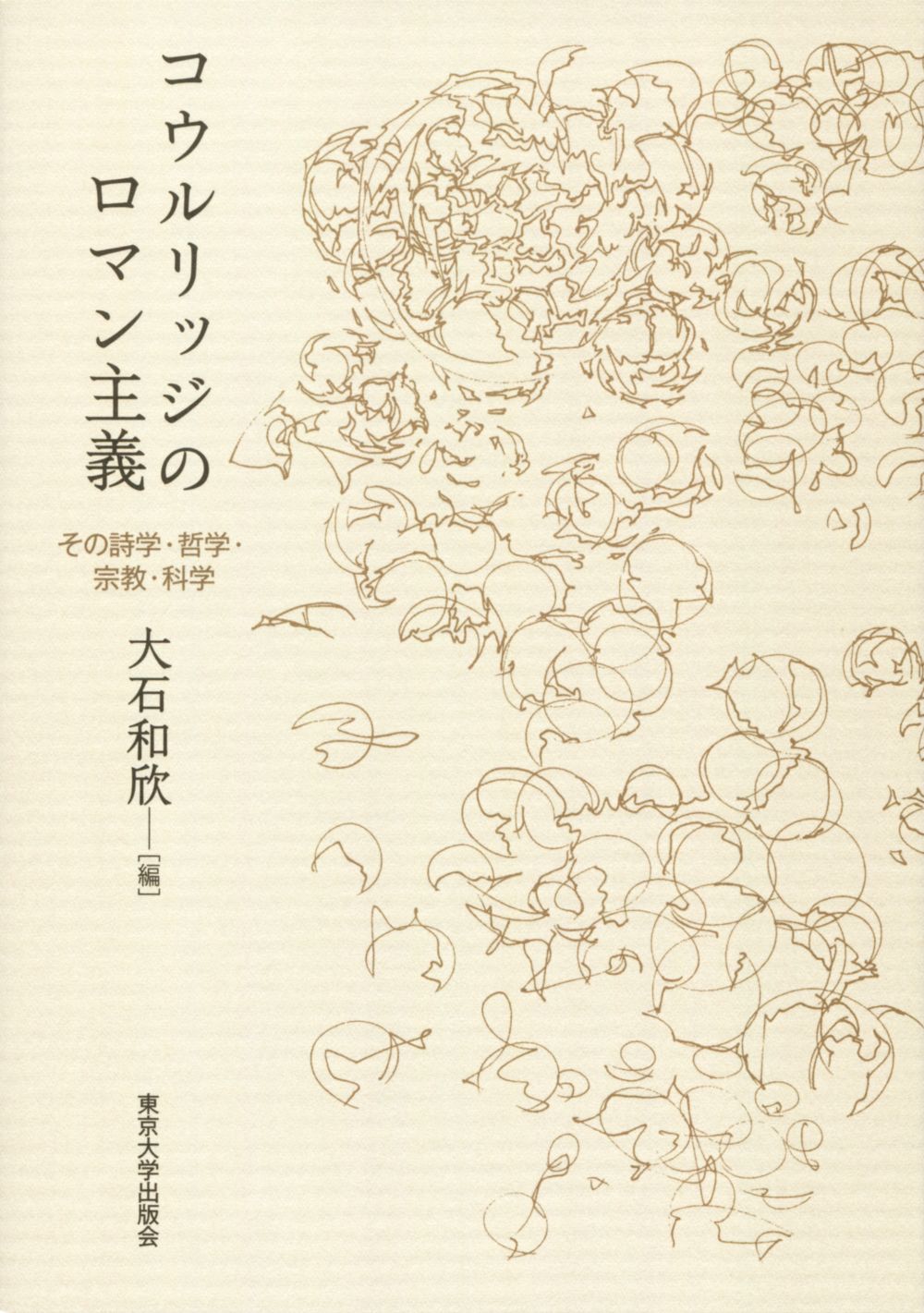
Coleridge no Roman-shugi (Coleridge’s Romanticism - Poetics, Philosophy, Religion, and Science)
Size
512 pages, A5 format
Language
Japanese
Released
March 13, 2020
ISBN
978-4-13-086059-8
Published by
The University of Tokyo Press
Book Info
See Book Availability at Library
Japanese Page
This edited volume reconsiders the intellectual legacy of Samuel Taylor Coleridge (1772–1834) by bringing together literary studies, philosophy, theology, aesthetics, political thought, and the history of science. While Coleridge is celebrated as the author of “The Rime of the Ancient Mariner” and “Kubla Khan,” he was equally a religious philosopher, critic, scientific thinker, and social and political critic. The volume argues that Coleridge’s oeuvre, ranging from classical philosophy and German Idealism to Christian mysticism, natural science, and political economy, offers a uniquely fertile site for rethinking the nature and scope of the humanities.
Throughout his career, Coleridge’s central preoccupation was the truly “human”: the interwoven domains of reason, emotion, imagination, desire, and faith. His poems, notebooks, and religious writings reveal his sustained effort to reconcile divided faculties of the mind and to articulate an integrated vision of human experience. Turmoil of his personal life, such as opium addiction, marital separation, and the fraught relationship with Wordsworth, did not undermine his intellectual project: instead it fed into a philosophical and poetic exploration of fragility, transcendence, and ethical responsibility. Literature, for Coleridge, was not a mere aesthetic pursuit but a mode of inquiry into existence itself. This volume takes that premise seriously by framing Coleridge as a thinker who continually sought to synthesize diverse fields of knowledge.
Part I “Panoramic Perspectives” offers a concise intellectual biography and maps out Coleridge’s major writings onto the shifting critical landscape of the twentieth and twenty-first centuries. It highlights his collaborations with Wordsworth, the transformative impact of his encounter with German philosophy, and his gradual turn toward Anglican theology. Coleridge’s thought is presented as a dynamic negotiation between competing intellectual traditions, such as empiricism and idealism, rationalist religion and mysticism, poetic expression and political commentary. This section establishes the conceptual coordinates necessary for understanding Coleridge’s wide-ranging intellectual engagements.
Part II “Forms of Humanistic Knowledge” examines Coleridge’s contribution to humanistic inquiry through theology, political thought, education, and aesthetics. Kazuyoshi Oishi’s chapter reads Coleridge’s theological idea of “oikonomia” as a critique of utilitarian liberalism and as a basis for reimagining ideals of community, ethics, and social order. Setsuko Wake explores Coleridge’s theory of education through a German romantic concept of “play,” situating him between Kant and Schiller and emphasizing his belief in the aesthetic and spiritual cultivation of latent human capacities. David Vallins reconsiders Coleridge’s idealism and theory of the sublime through Derridean thought, illuminating the tensions within his symbolic theory and the ambivalent status of presence, language, and consciousness. Together these chapters show that Coleridge was not simply a poet but an architect of humanistic knowledge—seeking unity where modern academic disciplines draw boundaries.
Part III “Religion and Science” focuses on the intersection of religious thought and natural science in Coleridge’s work. Noriko Naohara traces his intellectual journey from Unitarian rationalism to a more contemplative Anglican orthodoxy, highlighting his notion of “contemplative reason” as a faculty mediating between sense and understanding. Kuri Katsuyama analyzes Coleridge’s organismic theory of life, arguing that it anticipates modern holistic approaches to biology. Rather than seeing life as mechanistic, Coleridge conceptualized it as dynamic self-organization. Yoshiko Fujii revisits “The Rime of the Ancient Mariner” by examining Coleridge’s recurrent “allegorical visions.” Against dominant critical emphases on symbol, she argues that Coleridge’s evolving allegorical imagination constituted a form of religious rhetoric, shaping his understanding of revelation, sin, and redemption. This part shows Coleridge’s effort to hold together empirical knowledge and spiritual insight, reflecting the broader Romantic negotiation between science and religion.
Part IV “Poetics and Networks of Knowledge” investigates Coleridge’s poetry and prose as products of intellectual and interpersonal networks. Nahoko Miyamoto Alvey interprets the “conversation poems” as poetic enactments of shared inquiry and mutual elevation among friends and readers. Saeko Yoshikawa compares Coleridge and Wordsworth through the concepts of the “inner eye” and “inner ear,” revealing contrasting modes of imaginative perception. Akiko Sonoda examines Aids to Reflection to show how Coleridge, as editor and reader of Robert Leighton, created new transatlantic interpretive communities. These essays emphasize that Coleridge’s writing emerged from dialogues—across centuries, traditions, and readerships—rather than isolated acts of genius.
The volume as a whole presents Coleridge as a figure who persistently asked what the humanities could and should be. For him, literary activity was inseparable from ethical, philosophical, and religious inquires. His work embodies a model of knowledge grounded in imagination, dialogue, and interpretive openness, qualities urgently needed in an age of digital transformation, specialization, and fragmentation. By re-evaluating Coleridge’s interdisciplinary pursuits, the book proposes a renewed vision of the humanities as an integrative, intellectually adventurous, and ethically engaged enterprise. It demonstrates that Coleridge’s Romanticism remains relevant not simply as a literary and historical phenomenon but as a resource for contemporary thinking about the purpose, method, and future of humanity study.
(Written by OISHI Kazuyoshi, Professor, Graduate School of Arts and Sciences / 2025)