




Content warning: This press release discusses suicide and self-harm.
A large international team including researchers from the University of Tokyo wanted to know if and how climate change might increase the number of suicides associated with temperature around the world. Previous studies showed that hotter weather is often linked to a higher risk of suicide, but the present study combined data from an unprecedented 751 locations in 26 countries and used advanced climate models to estimate how the number of suicides related to temperature might change by the 2050s under different climate change scenarios.
It’s difficult to present climate change without sounding like all hope is lost. This latest research unfortunately adds weight to the burden but does shed some light on an issue that deserves more attention, that of climate-related suicide. Previous research demonstrates a clear seasonal pattern in rates of suicide around the world. And future projection studies provide the magnitude and pattern of climate-related health risks and impacts, helping identify and prioritize climate change adaptation policies and programs to address future health risks. But there was a gap in such studies where suicide mortality was overlooked, so Associate Professor Yoonhee Kim from the Department of Global Environmental Health at the University of Tokyo rose to the challenge.
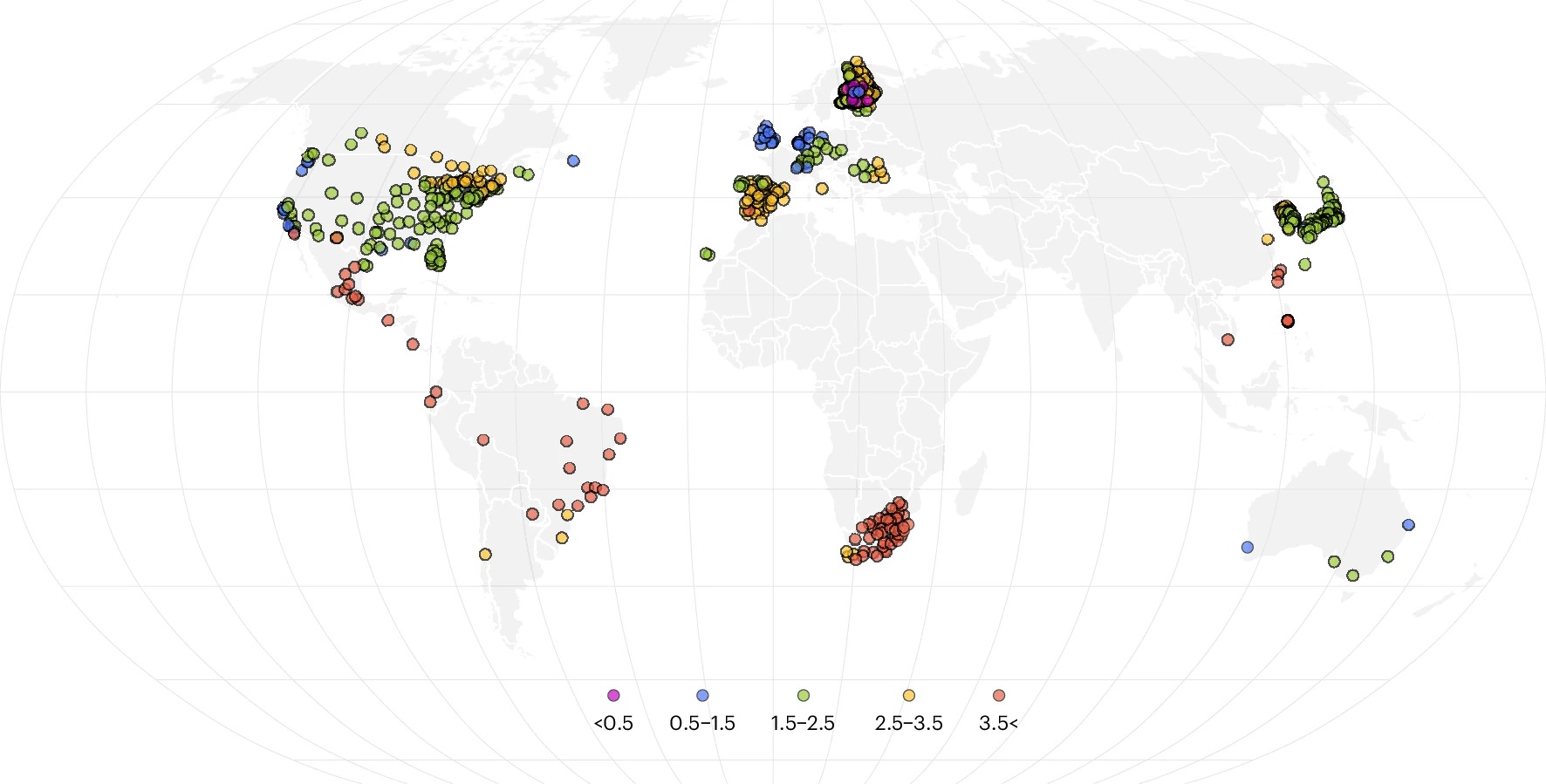
“Our study examined how temperature-associated suicide mortality will change by the 2050s under various climate change scenarios. We unfortunately found temperature-related suicide mortality is projected to increase in all studied areas as temperatures rise in the future,” said Kim. “We used an empirical statistical modeling approach based on standard health impact assessment methods. We quantified the burden of suicide mortality associated with daily temperatures and projected future increases in temperature-attributable suicide mortality by the 2050s under a range of climate and development scenarios, compared with the 2010s. The analysis was first conducted at each of the 751 locations, and the location-specific estimates were then combined by region.”
A challenge the team faced was getting the naturally very sensitive suicide data in the first place. In many parts of the world, particularly in lower- and middle-income countries, suicide deaths are not systematically recorded. Large parts of the world, including most of Africa and the Middle East, could not be included at all, but the team does not believe that the results would substantially change in terms of direction. Even where reliable records exist, such data are often restricted or prohibited altogether. In such cases, some regional analyses were carried out remotely by local collaborators, with only the results returned, which required considerable time and coordination. The available data were also subject to unavoidable limitations, including misclassification of causes of death and underreporting, partly because suicide inevitably carries a significant social stigma. But analysis of the wealth of data the team could compile yielded several insights.
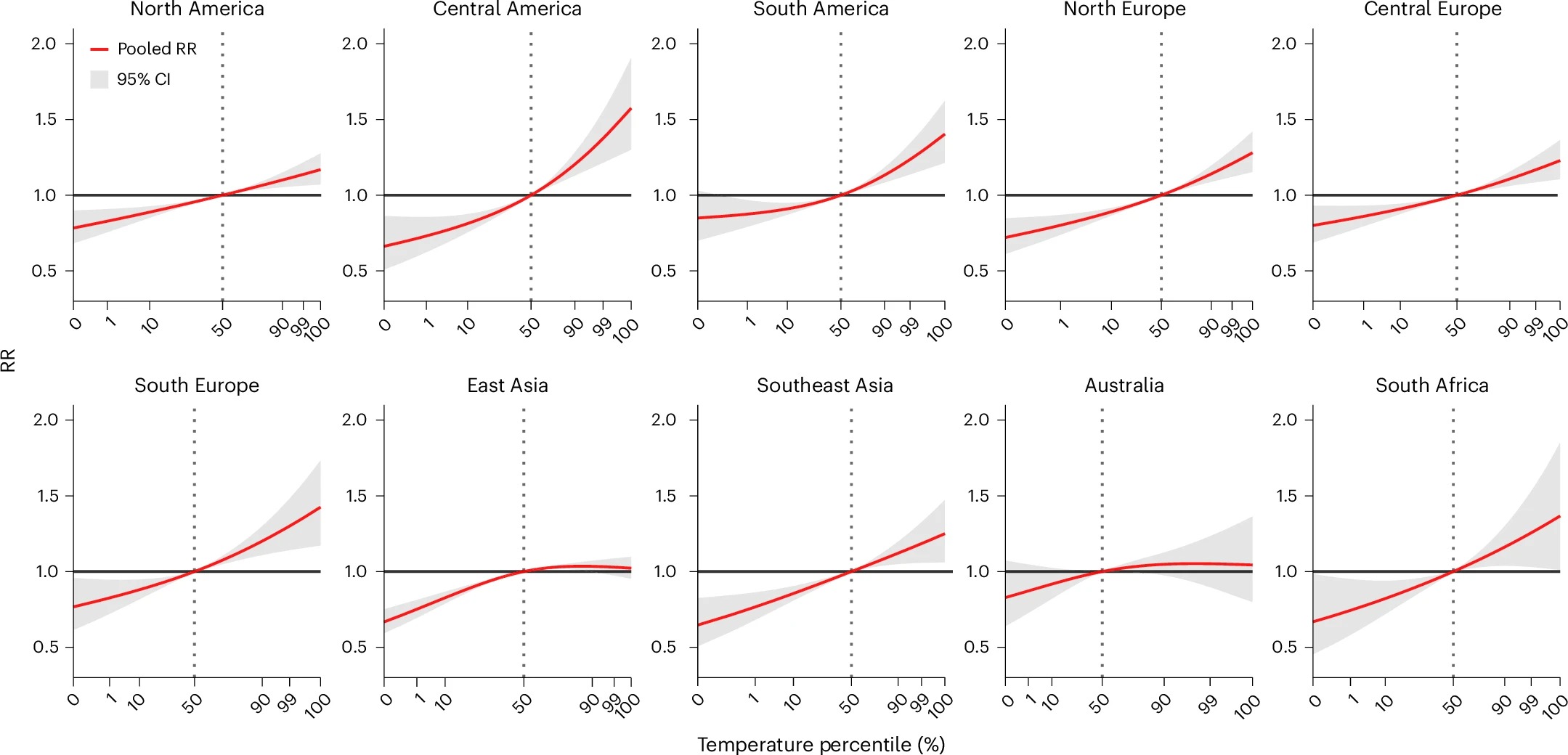
“The different ways suicide risk changed with increasing temperature across regions deserve further investigation. These regional differences may partly reflect variation in adaptation to high temperatures, including physiological acclimatization, behavioral responses and societal preparedness,” said co-author Yeonseung Chung at the Korea Advanced Institute of Science and Technology. “Populations in East Asia, which have long been exposed to hot and humid summers, may be more adapted to extremely high temperatures, leading to an attenuation of suicide risk at the upper end of the temperature distribution. Further investigation into these mechanisms should be an important priority for future research.”
As with any observational study, the patterns found do not establish causality. However, the analyses were adjusted for long-term and seasonal trends, and even the day of the week, to minimize such factors masking the impact of temperature. Because only short-term associations were examined, the findings suggest that higher temperatures may act as an immediate trigger for suicidal behaviors rather than an underlying cause. The team’s analyses also assumed no changes in population, baseline suicide rates, or adaptation to high temperatures over time. Kim and her colleagues plan to address these assumptions in future work and might also explore whether the temperature-suicide relationship has changed over time in countries with long historical records.
“Suicide is a complex phenomenon shaped by individual, social and environmental factors, and although we have consistently observed associations with ambient temperature, much remains unknown about the underlying mechanisms,” said Kim. “I often feel that I am grappling with a profoundly difficult question, trying to draw on as many perspectives as possible. While I am not a mental health professional and cannot offer a clinical perspective, I hope that, as an environmental epidemiologist, my work quantifying these associations and projecting future trends contributes to a better understanding of these persistent but poorly explained patterns. I'm sure that studies like ours, combined with practical community-level solutions, can help build resilience under a changing climate and ultimately prevent unnecessary suicide deaths among those most vulnerable to mental health challenges.”
If you or someone you know is struggling, free help and support is available:
UTokyo students can find mental health resources at the Student Counseling Center and the International Student Support Room in English, Chinese and Japanese. / 東京大学の学生は、学生相談所と留学生支援室でメンタルヘルスに関する英語、中国語、日本語の情報や資料を入手することができます。
Tokyo English Lifeline (TELL) provides free and anonymous English-language crisis counseling for people in Japan via phone at 03-5774-0992: https://telljp.com/
Yorisoi Hotline offers free consultations about any problem in Japanese and foreign languages via chat, Facebook messenger and phone at 0120-279-338. For foreign languages, press 2 after the recorded message for a consultation in English, 中文, 한국어/조선어, Tagalog, Português, Español, ภาษาไทย, Tiếng Việt, नेपाली भाषा, or Bahasa Indonesia. / 「よりそいホットライン」では、日本語や外国語で、チャットや Facebook メッセンジャー、電話(0120-279-338)により、無料で悩みを相談できます。外国語(英語・中国語・韓国語・タガログ語・ポルトガル語・スペイン語・タイ語・ベトナム語・ネパール語・インドネシア語)でのご相談は、録音メッセージをお聞きになった後、2番を押してください。
Befrienders International provides confidential support to people in emotional distress or crisis / 国際ビフレンダーズは、精神的苦痛や危機的状況に陥っている方々に匿名での相談を提供します: https://befrienders.org/
A list of helplines around the world / 世界各国のホットライン・電話相談サービスのリスト: www.suicide.org/international-suicide-hotlines.html
In an emergency, please dial / 緊急の場合は電話してください: 119 to call an ambulance or the fire department; or 110 to call the police (Japan only)/ 119番:救急車や消防車、110番:警察(日本国内用)