



Report on the Visit to Hawaiʻi Toward Dialogue and Improvement
April 21, 2026
In late March 2026, members of the University of Tokyo Task Force on the Repatriation of Human Remains and Related Matters (established in August 2025)—Executive Vice President Kaori Hayashi, Vice President Yujin Yaguchi, and Professor Mari Yoshihara—visited Hawaiʻi.
In November 2024, the University of Tokyo repatriated the ancestral remains of 10 Native Hawaiians, which had been collected and stored by the university, to Hui Iwi Kuamoʻo, an organization dedicated to repatriation of Native Hawaiian ancestors to their homeland. However, media reports and other sources revealed that communications during this process were both insufficient and inappropriate.
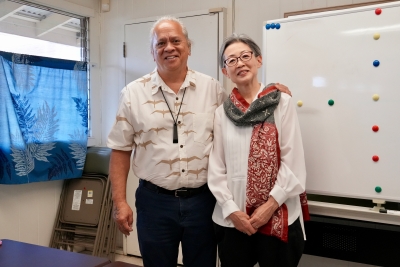
The delegation first met with Mr. Edward Halealoha Ayau, representative of Hui Iwi Kuamoʻo, in Hilo on the island of Hawaiʻi on March 30. Drawing on his 36 years of experience as a lawyer dedicated to the repatriation of Native Hawaiian ancestral remains, Mr. Ayau highlighted the difficulties that occurred in the repatriation process. In response, the delegation gave an apology for the university's inappropriate handling of the repatriation process.
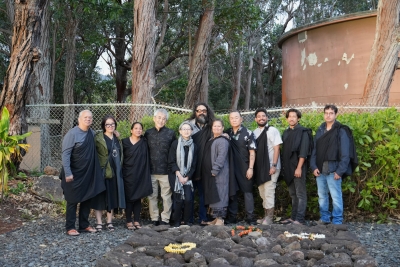
On the following day, March 31, the delegation attended a mihi (a Hawaiian term meaning "to apologize, reconcile, and restore") ceremony held on the island of Oʻahu where the repatriated remains are interred. At the ceremony, the delegation apologized to the Hawaiian ancestors for their separation from their homeland and the people and the long time it took to return to where they belong.
During their stay in Hawaiʻi, the delegation also visited experts at the Bishop Museum, which specializes in Hawaiian history and culture; the Smithsonian Institution, the preeminent museum complex of the United States; and the University of Hawaiʻi. Through these exchanges, the members gained further understanding of the concepts and practices of "ethical returns" and "shared stewardship," which are becoming increasingly prevalent internationally.
Building on the experience gained from this visit, the University of Tokyo will continue to deepen its understanding of Indigenous cultures and history, while striving to improve its initiatives and strengthen its framework regarding the repatriation of human remains.